
What Is Moneymaxxing? Optimizing Options, Not Just Balances
Moneymaxxing isn't about growing the number. It's about widening the options your existing money can buy.
 By Mina KiryuEditor-in-Chief / Money & Household Finance·2026.09.21 published·2026.09.27 updated·8 min read·2 sources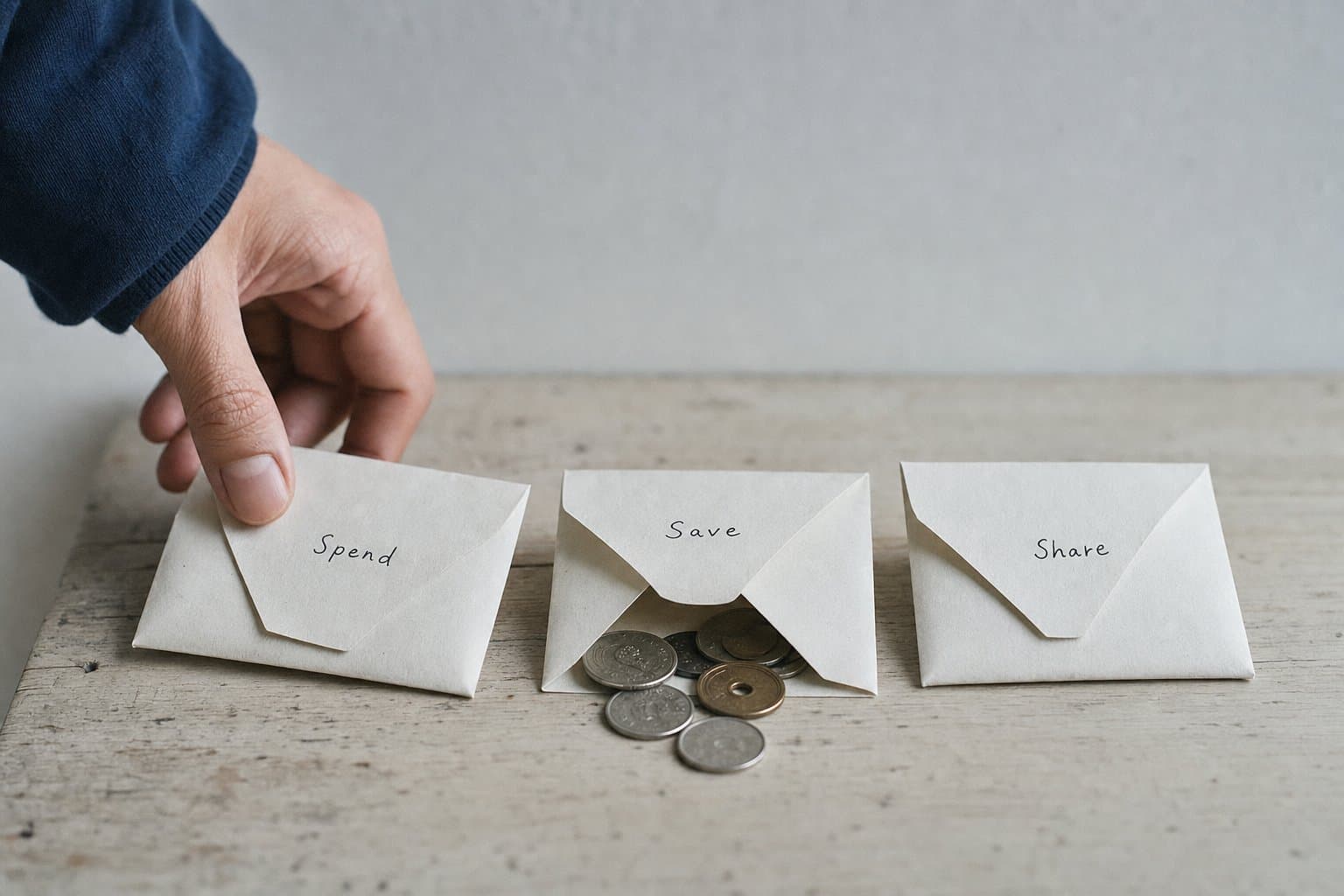
'How much have you saved?' If that question tightens something in your chest, the problem may not be your balance. It may be the question itself. Moneymaxxing, a term spreading through US social feeds in 2025–26, comes from the same family as looksmaxxing and healthmaxxing, where people add -maxxing to anything they want to optimize.
When the idea reaches household finance, though, its message is unexpected. It is not 'save harder.' It is closer to the opposite: how many options can you get out of the money you already have? The same sum locked somewhere you can't reach and the same sum you could move today look identical on paper, but they lead to very different lives.
One lets you say yes to a course, a move, or a rest between jobs. The other only lets you look at a number. Moneymaxxing cares about the second thing: how many doors your money opens, not how big the pile is. That shift matters especially in Japan, where talk about money tends to start and end with a single figure.
Japanese-language coverage of the term barely exists yet, so this piece begins with a clear definition. It then covers the background, why the idea works, a four-step way to try it this week, and the questions readers most often ask when they first hear the word.
What Is Moneymaxxing? Meaning and Background
Moneymaxxing is a way of running household finances where the goal is not a bigger number but more options from the money you already have. That's the short answer. Translated loosely as 'maximizing money,' it sounds like investing or aggressive saving. In its original use, though, it comes before either of those. It asks whether your money has named purposes, whether you can reach it quickly, and whether you can switch it to a new use when life changes. It is about how money is arranged, not how much of it you pile up.
The word comes from the -maxxing suffix in English-language internet slang. It first attached to appearance, sleep and health, areas of self-improvement where people try to push one thing as far as it will go. Money is a late arrival to the family, and it works differently. Most -maxxing trends ask you to do more. Moneymaxxing asks you to rearrange what you already have.
Why now, and why in Japan? According to J-FLEC's *Public Opinion Survey on Household Financial Behavior 2025* (published 18 December 2025), single-person households in Japan hold an average of ¥9.19 million in financial assets, but the median is ¥1.30 million. For single households in their thirties, the median was ¥1.00 million.
A sevenfold gap between mean and median means a small number of very large holdings are pulling the average up. The median is what the person exactly in the middle holds when everyone is lined up from least to most. It is much closer to what most readers will recognize from their own lives.
So the 'average savings' figure that dominates Japanese searches is not a ruler most people can measure themselves against. Yet it is the figure people see most, and the one many quietly compare themselves to. Measure yourself with a broken ruler and no amount ever feels like enough. You add, you check, and the gap never seems to close. The easiest way to understand moneymaxxing is as a proposal to replace the ruler itself. Stop asking how far you are from an average, and start asking how many real choices your money gives you right now.
Why It Works: Arrangement Over Amount
Why does thinking of money as options actually help? There are three reasons.
The first is decision fatigue. When all your money sits in one lump, every purchase makes you reconsider the whole thing: if I spend this, will I come up short later? Asking that over and over is exhausting, so people often end up choosing nothing at all. Split the money by purpose and each decision stays inside its own pot. In practice, more options means less effort per choice.
The second is access. Can you cover an unexpected expense? Can you consider a job change or a move? Can you spend a small sum on retraining? Can you turn down work you don't want? None of these depend on the balance alone. They depend on the *state* the money is in. Park a sum somewhere hard to reach and it opens fewer doors than the same sum sorted by purpose and ready to move.
The third is the ruler. For a long time, Japan's conversation about money has come down to one question: how much? The ¥9.19 million average gets passed around; the ¥1.30 million median does not. That imbalance quietly feeds money dysmorphia, the distorted sense that you are behind no matter what you hold. Moneymaxxing answers that feeling with action. Instead of arguing with the feeling, it changes what you count.
The most common misunderstanding is that this is just frugality with a new name: cut spending, grow the balance. It isn't. Compare it with soft saving, which puts the present ahead of the future. Whether to spend now or later is a question of how you divide your money. Moneymaxxing comes one step earlier, with how you arrange it. That's why it works just as well for people with a lot as for people with a little. If anything, the smaller the sum, the more it matters how flexible each yen is.
And as with the rest of the -maxxing family, like sleepmaxxing and cozymaxxing, keep the right to opt out. The moment optimization becomes a duty, the idea stops helping. How much it helps varies from person to person. If it doesn't fit your situation, you can set it aside.

How to Start Moneymaxxing: Four Steps
How to start moneymaxxing: four steps you can try this week. Treat them as ways to dig more options out of what you already have, not as a plan to grow a number.
① Count only the money you can actually move.
Not your net worth, but the sum you could move this week. Leave out fixed deposits, insurance, and anything already set aside for a purpose. Write it on paper. It takes about 15 minutes, and checking it once a month is enough. That figure is how many options you really have. Forget the ¥9.19 million average while you do this.
② Give your money names.
When your money is one big lump, every withdrawal comes with guilt. Split it by purpose and deciding becomes instant. This is exactly the idea behind sinking funds, and cash stuffing is the version with physical envelopes. Start with around three pots, such as living costs, a buffer, and things you want to do, and add more only if you find you need them.
If you'd rather go digital, the apps work differently: **Money Forward ME** pulls in multiple accounts and cards automatically and shows them by purpose, while **Zaim** relies on photographing receipts and filling in details by hand. Based on their published specifications, the first suits people who want step ① updated each month without typing anything, and the second suits people who want to check every line themselves.
③ Automate the entrance so you decide less often.
Every time you have to deliberate, your options shrink. Set up one rule that moves a fixed amount on payday, and you never have to decide again. This is covered in detail in pay yourself first. There is no single right amount. Start with a figure that doesn't squeeze your daily life, watch how it goes for two or three months, then adjust.
④ Prepare the exit.
Finally, get the side you *withdraw* from ready. Just having a brokerage account gives you more choices later. This says nothing about which product performs better. Based on published information, **SBI Securities** stands out for its wide product range and fee structure, while **Rakuten Securities** stands out for its points integration and easy-to-read interface. Having an account is having an option; it doesn't oblige you to buy anything. Investment decisions depend on your circumstances, so talk to a qualified professional if you're unsure.
If it isn't working, find the step that's causing trouble. If counting makes you anxious, do step
- less often. If keeping track of the pots feels like paperwork, merge some in step
- . If the automatic transfer leaves you short, lower the amount in step
- . Each time, the fix is to make it lighter, not to quit.

The Takeaway: Replace Your Ruler
One more time, plainly. Moneymaxxing is not a savings competition. The sevenfold gap in J-FLEC's survey, a ¥9.19 million average against a ¥1.30 million median, shows that comparing yourself to an average no longer works as a measure. So change the measure. How much can you move this week? Does that money have names? Is the entrance automated? Is the exit ready? Your answers to those four questions are the count of your options.
You don't need to do all four. The first step is simply to write down, today, the money you can actually move. That alone replaces the ruler. After that, if you want to see your money clearly and have an exit ready, you can compare specifications and fees for household finance services (Money Forward ME, Zaim) and brokerage accounts (SBI Securities, Rakuten Securities) below and apply. Opening any of them gives you more options, and none of them obliges you to buy anything afterward. Start by changing who you compare yourself to: not the national average, but yourself last week.
This article is editorial content, not investment advice. How well the approach works, and how it feels, will vary from person to person. Source: J-FLEC, *Public Opinion Survey on Household Financial Behavior 2025* (published 18 December 2025).
FAQ
How is moneymaxxing different from ordinary saving or cutting back?
Saving and cutting back aim to make the balance bigger. Moneymaxxing aims to make the same balance give you more choices. Money that is split by purpose and easy to move gives you more options than the same amount stuck in one hard-to-reach lump. You don't have to cut spending; the core work is rethinking how your money is arranged. So it can work alongside a frugal plan or on its own.
Can I do moneymaxxing if I don't have much saved?
Yes. If anything, the smaller the sum, the more it matters how flexible each yen is. In J-FLEC's 2025 survey, the median financial assets of single-person households were ¥1.30 million, and ¥1.00 million for those in their thirties, far below the ¥9.19 million average. You don't need to measure yourself against that average. Start by writing down what you can move this week and giving it names.
Why do I feel anxious when I compare myself to average savings?
Because averages come out higher than most people's reality. In J-FLEC's 2025 survey, single-person households held an average of ¥9.19 million in financial assets but a median of ¥1.30 million. That sevenfold gap comes from a small number of very large holdings. For most people, the average is not a useful ruler. Comparing yourself to yourself last week instead can ease the pressure, though how much varies from person to person.
Do I have to start investing to practice moneymaxxing?
No. Having a brokerage account can keep a future door open, but opening one doesn't oblige you to buy anything, and this is not a recommendation of any product. Investments can lose value, and whether they suit you depends on your income and household situation. If you're unsure, talk to a qualified financial professional before deciding.
Do I need a budgeting app?
No. Paper and a pen are enough to start. The first step is simply writing down the money you could move this week, so you don't need any tools. If you want to go digital, the published specifications show that Money Forward ME pulls in your accounts and cards automatically, while Zaim relies on photographing receipts and entering details by hand. Pick whichever one you're more likely to keep using.
About this article
This article was written by Mina Kiryu (Editor-in-Chief / Money & Household Finance) of the Tokyo Decoded editorial team, with sources and facts checked by the team. We keep editorial independence from advertisers. See our editorial policy.
Sources
Related
Cash Stuffing: The TikTok Budget Trend That Japan Invented Decades Ago
Cash Stuffing has 500M TikTok views. Japan's been doing the same thing — called fukuro-wake kakeibo — for generations. Here's why it works.
Read more →
The 2026 Guide to Global Money Trends: From Loud Budgeting to Cash Stuffing
Loud Budgeting, Soft Saving, Cash Stuffing — a single map of the money trends born overseas. Which one fits you, and how to actually practice it in Japan.
Read more →
Soft Saving: Why 73% of Gen Z Prioritize Today Over Retirement
73% of US Gen Z say today's quality of life beats retirement savings, per Intuit. Meet Soft Saving—frugality that doesn't sacrifice you—seen through Japan's saving traditions.
Read more →