
Ragweed Season in Japan: Why Your September Cold Won't Go Away
A September cold that lingers may be autumn pollen. What Japan's ragweed season is, and how to handle it at home.
 By Lukas WeberWriter / Sleep & Wellness, Data Verification·2026.09.23 published·2026.09.27 updated·8 min read·2 sources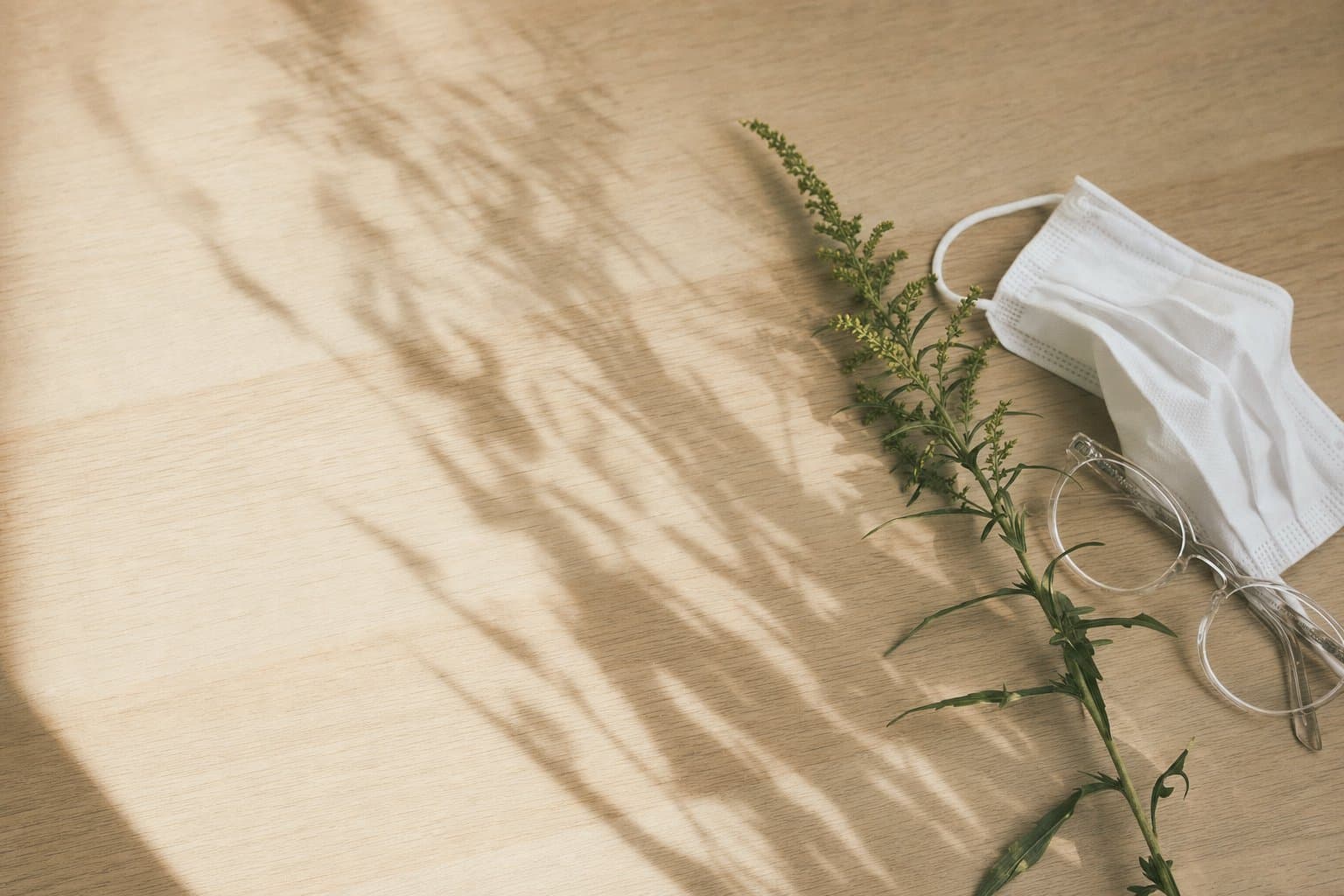
It started in early September. A runny nose that won't stop, itchy eyes, a scratchy throat. No fever, and it has been going on for well over two weeks. That 'cold that won't go away' may not be a cold at all.
Japan's spring cedar pollen is famous. Autumn pollen is not. But according to the Ministry of the Environment's Environmental Health Manual on Pollinosis, autumn hay fever in Japan is driven by ragweed, giant ragweed and mugwort — all in the Asteraceae family — plus Japanese hop, in the Cannabaceae family. These weeds release pollen from late summer into autumn.
The trouble is that autumn pollinosis is easy to misread. In March, sneezing gets put down to pollen automatically. In September, the same symptoms get filed under 'seasonal change' or 'a cold going around.' So nothing changes: the same commute, the same laundry hung outside, the same futon airing on the balcony, week after week.
This piece uses the Ministry's own material to explain what autumn pollen actually is and how long the season lasts. Then it turns to the part you control: your route home, your laundry, your bedding and the air in your room. Diagnosis belongs to a clinic. Sorting out your apartment doesn't, and you can start tonight.
What is autumn hay fever in Japan, and how long does it last?
Autumn hay fever is an allergic reaction — runny nose, sneezing, itchy eyes — to pollen from weeds that flower between late summer and autumn. The Ministry of the Environment's Environmental Health Manual on Pollinosis (2022 revision) names the culprits: ragweed, giant ragweed and mugwort, all Asteraceae, plus Japanese hop, in the Cannabaceae family. So how long does ragweed season last? Based on what the manual states, from late summer through autumn. When exactly it ends varies by region and by year.
The same material contains a detail that changes how you see the whole season. The first case of pollinosis ever reported in Japan was ragweed pollinosis, in 1961 — not the cedar pollinosis that dominates public conversation today. Japan's history of hay fever begins in autumn. The equation 'pollen = spring = cedar' came later.
The practical difference comes down to the plants themselves. Cedar and cypress are tall trees, and wind carries their pollen long distances from forested hills. Ragweed, mugwort and Japanese hop are low weeds that grow along roadsides, riverbanks and vacant lots. Their pollen stays concentrated closer to where the plants grow. In autumn, which route you walk — and what grows in the empty lot outside your window — matters more than it does in March. If you live near a river embankment, the edge of a park or an unbuilt plot, a source may be closer than you think.
That also puts autumn pollinosis in proper perspective for anyone living in Japan. It isn't a late echo of cedar season. It is a separate season, with different plants, different sources and different points of contact with daily life. People react to different pollens, so someone who gets through spring easily can still struggle in September.
Timing and volume vary by region, and this article won't invent city-level figures or dispersal distances. Adding numbers beyond the primary source would be fiction, not editing. For local conditions, check your prefecture's pollen updates or a weather service's pollen forecast.
Why autumn pollen gets mistaken for a cold in Japan
Autumn pollinosis passes for a lingering cold for three reasons.
First, seasonal expectation. September in Japan brings cool mornings, and summer fatigue hasn't worn off yet. A runny nose reads as 'I got chilled' long before it reads as pollen. In March, pollen is the first suspect. In September, it often isn't a suspect at all.
Second, you can't see the cause the way you can with cedar. Cedar pollen comes with a vivid image: hillsides releasing yellow clouds. Ragweed and Japanese hop are just the weeds you cycle past on a riverbank path. The cause blends into ordinary scenery, so you never link it to the symptoms.
Third, the switch to spring habits never happens. In spring, a whole routine kicks in at once: masks, drying laundry indoors, brushing off your coat at the door. Autumn has nothing to set it off. Worse, autumn is when people finally open their windows after a summer of air conditioning and put futons out on the balcony — right when weed pollen is in the air.
Why do household measures help at all? The mechanism is simple. Symptoms relate to how much pollen reaches your eyes and nose. Pollen comes indoors on clothes, hair and fabric, settles on floors and bedding, and gets stirred up again every time you move. Avoiding the source, cutting down what you carry in and removing what settles indoors are three separate layers, and each one reduces exposure.
A common misconception is 'no fever, so it's just a head cold.' Broadly speaking, a common cold tends to clear up within several days to about a week, while pollen-driven rhinitis and eye itching last as long as that pollen is in the air. Thin, watery nasal discharge, repeated sneezing and itchy eyes are commonly described signs of pollinosis.
These are general distinctions, not a self-diagnosis checklist. If symptoms persist, or come with fever, significant pain or difficulty breathing, see a medical professional — an ENT, an eye clinic or a general clinic. This article is not a substitute for diagnosis or treatment.
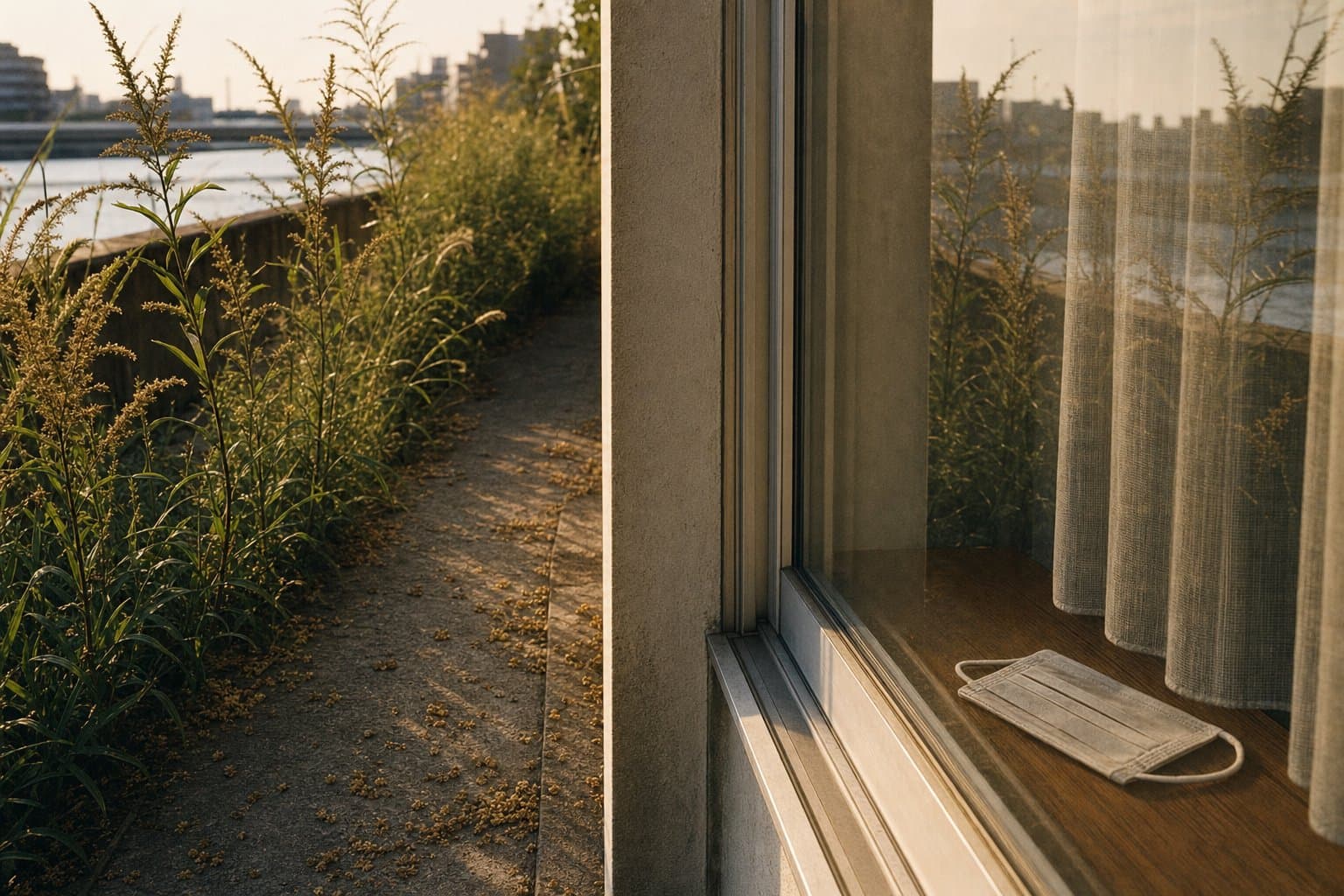
How to manage ragweed season: a five-step household routine
Medication and treatment belong to a clinic. What follows covers only the household side. The aim is to reduce exposure, not to get rid of symptoms, and results vary from person to person.
① Change one segment of your route. If your commute or evening walk runs along a riverbank path or past a weedy lot, detour around that stretch or cross to the mown side of the road. It takes less effort than anything else here.
② Bring out masks and glasses again in September. Non-woven disposable masks (Unicharm Cho-Kaiteki, Iris Ohyama disposable masks) are widely available in Japan. Choose a shape that leaves few gaps around the cheeks. If itchy eyes are the main problem, pollen glasses with a side hood (Eyeguard, JINS Kafun Cut) are an option.
③ Stop pollen at the entryway. Brush off your outer layer before stepping inside, keep your bag off the floor, and wash your face and hands as soon as you get home. A rule the whole household shares — nothing comes past the genkan — works better than one person trying alone.
④ Rethink laundry and bedding. Drying laundry outdoors during pollen season collects pollen in the fabric. You'll only keep drying indoors if clothes dry fast enough, and that is where a clothes-drying dehumidifier (Iris Ohyama clothes dryer dehumidifier, Sharp Plasmacluster drying dehumidifier) proves its worth. On days you air futons outside, brush them off before bringing them in, then vacuum the surface with a futon cleaner (Raycop, Iris Ohyama futon cleaner).
⑤ Finish with the bedroom air. You spend roughly a third of the day in your bedroom. An air purifier works best running continuously, placed where air can circulate rather than flush against a wall. Compare four published specs side by side: filtration method (HEPA or not), rated room size, filter replacement interval and quiet-mode noise. Once you do, the price differences start to make sense. Daikin, Sharp Plasmacluster and Panasonic Ziaino are common starting points in the Japanese market.
How long should you keep this up? Until your local pollen information shows the season has eased. If things aren't improving, notice when symptoms are worst. If it's outdoors, focus on your route and mask. If it's after you get home, focus on the entryway. If it's when you wake up, look at laundry, bedding and bedroom air.
If symptoms continue anyway, see a clinic rather than buying another gadget. For the air itself, see how to choose a humidifier; for the bedding side of a better sleep environment, see how to choose a pillow.
The takeaway: get through ragweed season by adjusting your home
Autumn pollinosis can go unrecognised for weeks because it looks so much like a cold. According to the Ministry of the Environment's manual, the causes are ragweed, giant ragweed, mugwort and Japanese hop. And the fact that Japan's first reported case of pollinosis was ragweed pollinosis, in 1961, shows plainly that this season is no footnote.
Split the task in two. Judgement and treatment go to a clinic. Your household routine is up to you. The first step is small: on your way home today, notice whether any stretch of your route runs past a riverbank or a weedy lot.
A clothes-drying dehumidifier, a futon cleaner and a bedroom air purifier are useful beyond autumn. They also earn their keep in the rainy season, against year-round house dust and through dry winters. That is exactly why it pays to compare them on published specs with like-for-like conditions, rather than on price alone.
You can compare specifications and prices below. First, write down your bedroom size in tatami mats and how much laundry you dry indoors, and the shortlist will narrow quickly. The right machine isn't the most expensive one. It's the one that fits your room.
FAQ
How long does ragweed pollen season last in Japan?
The Ministry of the Environment's Environmental Health Manual on Pollinosis describes ragweed, giant ragweed, mugwort and Japanese hop as plants that release pollen from late summer through autumn. When the season ends varies by region and by year, so there is no single nationwide date. The most reliable way to tell whether it has eased where you live is to check your prefecture's pollen updates or a weather service's pollen forecast.
How can I tell a lingering cold from autumn hay fever?
Broadly speaking, a common cold tends to clear up within several days to about a week, while pollen-driven symptoms last as long as that pollen is in the air. Watery nasal discharge, repeated sneezing and itchy eyes are commonly described signs of pollinosis. These are general distinctions, not a way to diagnose yourself. If symptoms drag on, or come with fever, significant pain or difficulty breathing, see a medical professional.
Which kind of clinic should I visit for suspected autumn hay fever?
If nasal symptoms are the main problem, an ENT clinic is a natural place to start. If itchy eyes are the main problem, try an eye clinic. If you are unsure, a general clinic can advise you. Seek care promptly if you have fever, significant pain or difficulty breathing. This article covers only the household side and is not a substitute for diagnosis or treatment.
Is an air purifier useful for autumn pollen?
An air purifier circulates and filters indoor air, including air carrying pollen you have brought in. It works best running continuously, placed away from walls where air can circulate. When comparing models, check four published specs: filtration method (HEPA or not), rated room size, filter replacement interval and quiet-mode noise. It reduces exposure indoors, but how much it helps varies from person to person.
Should I stop drying laundry outside in autumn?
Drying laundry outdoors during pollen season collects pollen in the fabric. While symptoms are bothering you, one option is to switch to drying indoors. A clothes-drying dehumidifier helps if slow drying makes that hard to keep up. On days you do air futons outside, brush them off well before bringing them in, then vacuum the surface with a futon cleaner.
About this article
This article was written by Lukas Weber (Writer / Sleep & Wellness, Data Verification) of the Tokyo Decoded editorial team, with sources and facts checked by the team. We keep editorial independence from advertisers. See our editorial policy.
Sources
Related
How to Choose a Pillow: Height Guide by Sleep Position
Nearly 60% feel their pillow doesn't fit. A practical guide to height and material by sleep position.
Read more →
Heating Cost in Japan: The One Formula That Prices Every Heater
Heating cost in Japan comes down to one formula: watts ÷ 1000 × hours × 31 yen. Here's how to price your own heater.
Read more →
How to Choose a Humidifier: Comparing 4 Types for Autumn
The right humidifier starts with the type. Compare steam, evaporative, ultrasonic and hybrid.
Read more →