
Dry Itchy Skin in Autumn: Stop Winter Itch Before It Starts
Shin itch at night in autumn? Over-washing may matter more than what you apply. A Japan-based routine.
 By Jiwoo SeoSocial Media / Beauty & Skincare·2026.09.25 published·2026.09.27 updated·8 min read·1 sources
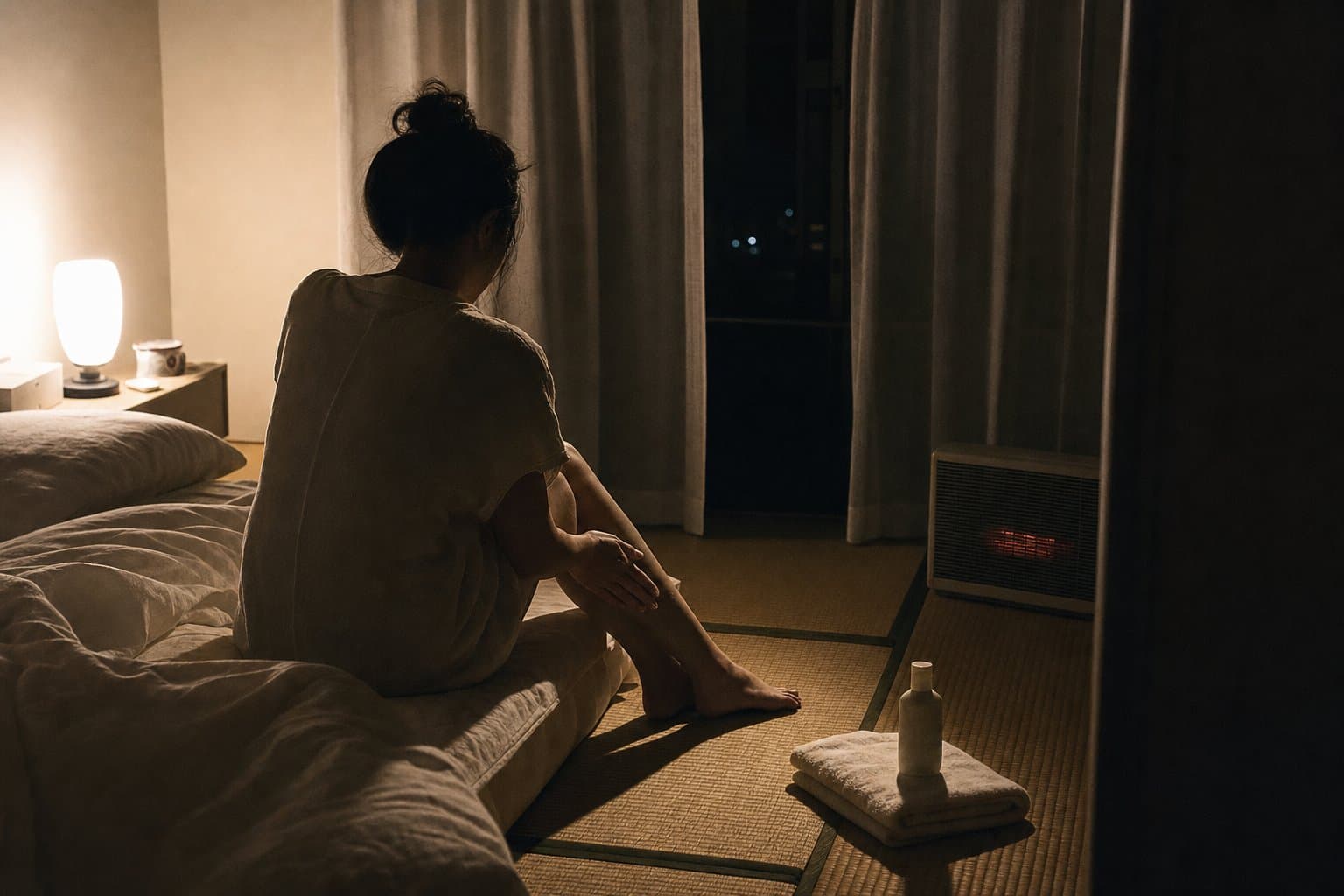
It usually starts after you get into bed. Your body warms up, and the skin along your shins begins to prickle. You scratch without deciding to, and by morning there are fine scratch lines. For a lot of people living in Japan, this feeling comes back every October, sometimes spreading to the lower back, the flanks, or the outer upper arms.
There are too many suspects: the heater, the dry outdoor air, the nightly bath. So the season passes without ever isolating the cause, and the itch simply becomes part of winter. If you have switched moisturizers and it still returns every year, the place to look may be the bathroom. This particular itch often responds faster to subtraction than to addition.
The Japanese Dermatological Association's clinical guide lists excessive bathing, cleansers with strong degreasing action, and scrubbing as aggravating factors. In other words, the daily routine you follow to stay clean can also be the raw material for the itch. That is good news, because a routine is something you control.
What follows is an organization of published information, not a diagnosis or a substitute for medical care. It is arranged in the order you can change things, starting with tonight's bath, and it ends with the signs that mean it is time to stop experimenting and see a dermatologist.
What Is Asteatosis, Really?
Asteatosis, or sebum deficiency, is the medical name for skin that has lost both its surface oil and the water held in its outermost layer, the stratum corneum. It looks dull, rough, or faintly flaky, sometimes with a fine crackled pattern on the shins, and it tends to itch, especially when the skin warms up. It is treated as a condition rather than a cosmetic nuisance because the itch invites scratching, and scratching can turn dry skin into something closer to eczema.
According to the Japanese Dermatological Association's Clinical Guide for Asteatosis 2021 (Jpn J Dermatol 131(10): 2255–2270), the condition is typified by winter xerosis, with dryness of outdoor and indoor air acting as the environmental factor. Listed separately are the aggravating factors: excessive bathing, cleansers with strong degreasing action, and scrubbing. The same guide notes that skin dryness is observed in more than 70% of older adults, and that moisturizers are the foundation of treatment.
Age matters because sebum output tends to fall over time, but younger people are not exempt: a heated apartment and a hot nightly bath recreate the same conditions at any age. In Japan this is familiar territory for dermatologists, and the ingredient families you see on drugstore shelves overlap with what is prescribed in clinics. It is also worth noting what the guide does not say.
It does not frame bathing itself as the enemy. The word is excessive, which leaves room for a bath that is warm, short, and gentle. The other useful detail is that environment and aggravation are written as two different things. You cannot choose the air in a Tokyo apartment in November. You can choose the water temperature, the cleanser, and the way you wash, tonight.
If you treat shin itch purely as a moisturizing shortfall, the habit that strips the skin every evening stays untouched, and you end up applying cream on top of a problem you recreate every night. The sequence is two-part: reduce what you remove, then replace it quickly. Everything in the rest of this article follows that order.
Why Shins Itch in Autumn in Japan
Why the shins, and why autumn? The shins, lower back, and outer arms have relatively few sebaceous glands to begin with, so they hold less margin. From October, dry outdoor air and dry heated indoor air stack on top of that, which is why the guide uses the term winter xerosis at all. The mechanism is fairly simple.
The skin's surface works as a barrier: a thin film of sebum and a tightly packed stratum corneum slow the loss of water from below. Hot water and strong surfactants remove part of that film, and friction from a towel roughens the layer beneath it. Once the barrier thins, water escapes faster, the skin feels tight, and the nerve endings near the surface become easier to trigger.
Warmth then amplifies the sensation, which is why the itch tends to peak after a bath or once you are under the covers. Scratching relieves it for a moment but damages the barrier further, so the next night starts from a worse position. That loop is the thing to interrupt. Life in Japan adds one more layer.
Daily immersion in the bath, and the nylon towel worked into a stiff lather and run firmly over the whole body, are both normal here. They are pleasant, hygienic habits. They also line up almost exactly with the three aggravating factors named in the guide: excessive bathing, strongly degreasing cleansers, and scrubbing.
And in heating season you want the water hotter, while the air you step out into is drier. So in a Japanese autumn, the aggravating factors are concentrated into the same fifteen minutes of your day. That concentration is the opportunity: reorder those fifteen minutes and the rest often follows. A common misunderstanding is that a squeaky, tight feeling after washing proves you are properly clean.
On dry skin, that feeling is closer to a signal that too much oil went down the drain with the dirt. Everyday sweat and grime on the shins come off with lather and warm water; they do not call for a rough towel. The broader shift from adding steps to protecting the barrier runs through the global beauty trends shaping 2026 as well.
Step by Step: A Gentler Bath
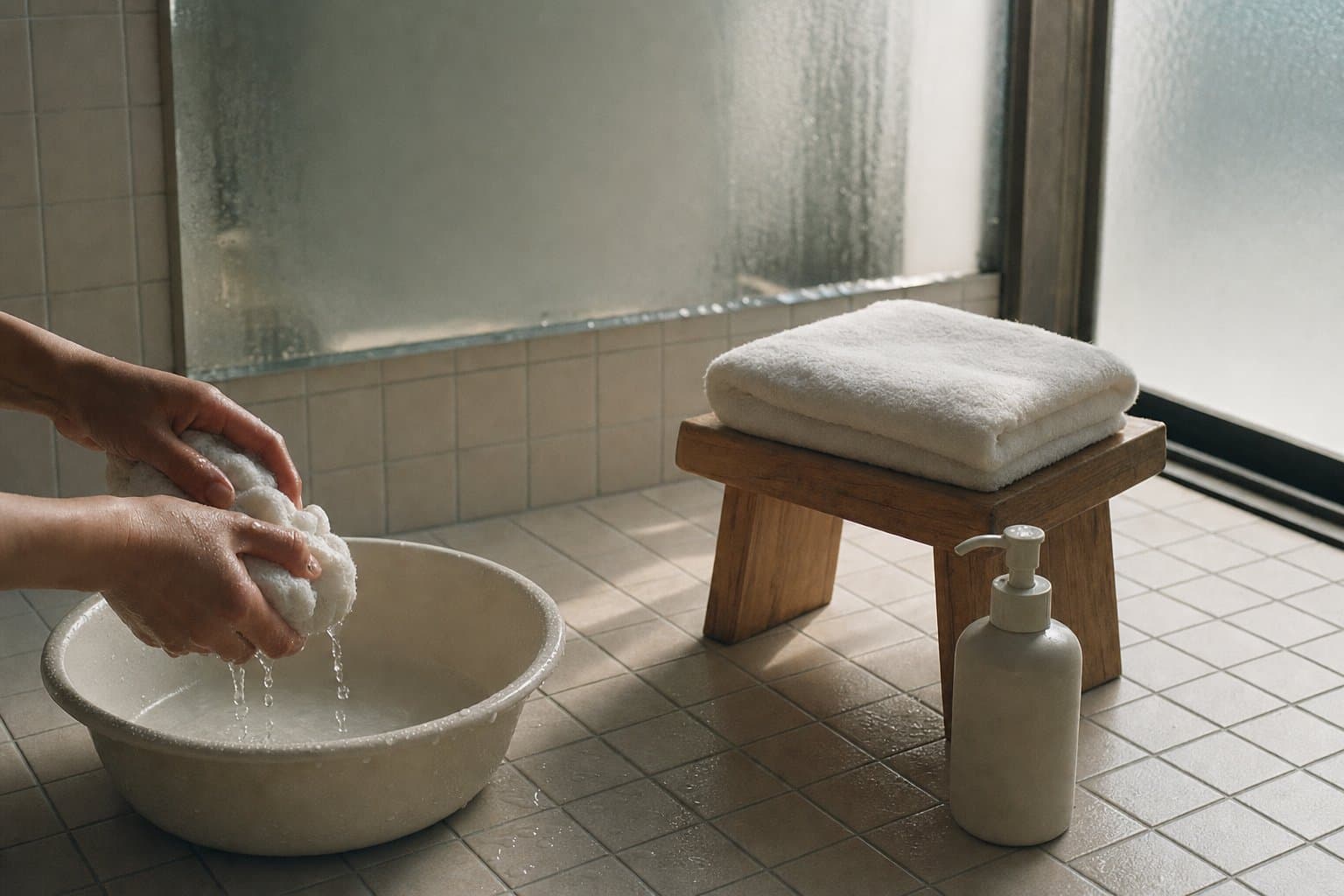
- Set the water 'not too hot.' Rather than chasing a number, use your own skin as the gauge: is it flushed red when you step out, does it feel tight within a minute? If either is true, lower the temperature a little next time and check again.
- Keep the soak 'not too long.' On itchy nights, treat a long warming soak as a separate occasion; a shorter bath or a shower is a reasonable choice while the shins are flaring.
- Re-read your cleanser.
Check whether the body wash uses mild, amino-acid-type surfactants, and whether added fragrance or alcohol is something you want on dry shins. Two widely stocked options in Japanese drugstores are Minon Whole Body Shampoo (Daiichi Sankyo Healthcare) and Curél Foaming Body Wash (Kao); they differ in surfactant approach and in whether the product dispenses as foam. Whatever you use, rinse thoroughly, because residue left on the skin can itself irritate. ④ Stop scrubbing.
Put the nylon towel aside and roll lather over the skin with your palms. Shins and lower back rarely need daily friction; on many days, lather running down from the upper body plus a rinse is enough. Save full washing for areas that sweat or carry odor, such as the armpits and groin. ⑤ Moisturize right after the bath.
Press the towel rather than rub, and apply while the skin is still damp, ideally before you get dressed. Spread it in the direction of hair growth, using enough that the skin looks faintly glossy rather than so little that you have to rub it in.
- Don't over-dry the room. Even moving your futon or bed out of the heater's direct airflow changes the conditions you sleep in.
- Give it a fair trial, then sort out what is happening.
Keep the changes for about 2 weeks before judging, because the barrier does not rebuild overnight. If the itch eases, keep the routine through the dry season rather than stopping as soon as it improves. If nothing changes, check whether one step has slipped; often it is the towel or the water temperature creeping back.
If a moisturizer stings, stop that product and consider a different type. If redness, oozing, or thickened patches appear, or the itch is spreading, stop adjusting on your own and see a dermatologist. How quickly skin responds varies from person to person, and none of these steps is a treatment in itself.
Moisturizers and When to Seek Care
To sum up: shin itch in autumn is usually less about what you forgot to apply and more about what you remove every night. Cut back on heat, time, degreasing, and friction first; then replace oil and water right after the bath. Choosing a moisturizer gets easier when you sort by the character of the ingredient.
Over-the-counter products containing heparinoid (for example Hirumild Lotion from Kenei Pharmaceutical) are formulated toward holding water; urea-based products can feel stimulating depending on the state of the stratum corneum; petrolatum works in the direction of covering the surface. A light lotion suits broad zones like the shins and lower back, and a cream or ointment suits the one spot that always cracks. Responses vary, so stop if a product stings.
If the itch persists for weeks, if scratching has turned into something eczema-like, or if it keeps you awake, you are past the range of self-care: see a dermatologist. If weekday clinic hours are hard to reach, telemedicine services covering dermatology, such as DMM Online Clinic, are an option. Your first step is tonight: put the nylon towel away and leave a moisturizer waiting just outside the bathroom door.
Use the links below to compare moisturizers, cleansers, and online consultation options, and see also our piece on slow aging.
FAQ
Do I need to soap my whole body every day?
The guide names excessive bathing and scrubbing as aggravating factors, not bathing itself. A practical split is to wash areas that sweat or carry odor, such as the armpits and groin, every day, while treating dry zones like the shins and lower back more lightly. On many days, lather running down from above and a rinse are enough there. How far to scale back depends on your skin, so use tightness or itch after the bath as your guide and adjust from there.
Should I stop using a nylon body towel?
The guide lists scrubbing as an aggravating factor, so during the dry, itchy months it makes sense to set the nylon towel aside and spread lather with your palms instead. This does not mean you can never use one again, but on dry zones like the shins and lower back, gentle hands are usually enough to get clean. Keeping that habit even after the itch settles is a simple way to go into the next dry season with less damage to undo.
What is the difference between heparinoid, urea, and petrolatum?
Organized from published information: heparinoid products are formulated toward holding water, urea-based products can feel stimulating depending on the state of the stratum corneum, and petrolatum works by covering the surface. If you have scratch marks and the skin stings easily, starting with a less stimulating option is sensible. You can also split by texture: a lotion for broad areas, a cream or ointment for the one spot that keeps cracking. How well each suits you varies from person to person.
When and how much moisturizer should I apply?
The basic timing is right after the bath: press the towel to take off water, then apply while the skin is still damp, before you get dressed. Use enough that the surface looks faintly glossy, and spread it along the direction of hair growth rather than rubbing it in hard. Adding a second layer when you dress in the morning is another option. How much feels right differs by person, so follow the product label if stickiness or stinging bothers you.
When should I see a dermatologist instead of handling it myself?
If the itch persists for weeks, if scratching has turned into something eczema-like, or if it keeps you from sleeping, you are past the range of self-care. The same applies if redness or oozing appears, or if about 2 weeks of gentler washing and consistent moisturizing bring no change. In those cases, consider seeing a dermatologist. If weekday clinic hours are hard to reach, telemedicine services covering dermatology, such as DMM Online Clinic, are an option.
About this article
This article was written by Jiwoo Seo (Social Media / Beauty & Skincare) of the Tokyo Decoded editorial team, with sources and facts checked by the team. We keep editorial independence from advertisers. See our editorial policy.
Sources
Related
A Field Guide to Global Beauty Trends: From Slow Aging to Quiet Luxury
Slow Aging, Quiet Luxury — a single map of global beauty trends. Not the buzzy ingredients or brands, but the shift in beauty values behind them, read through data.
Read more →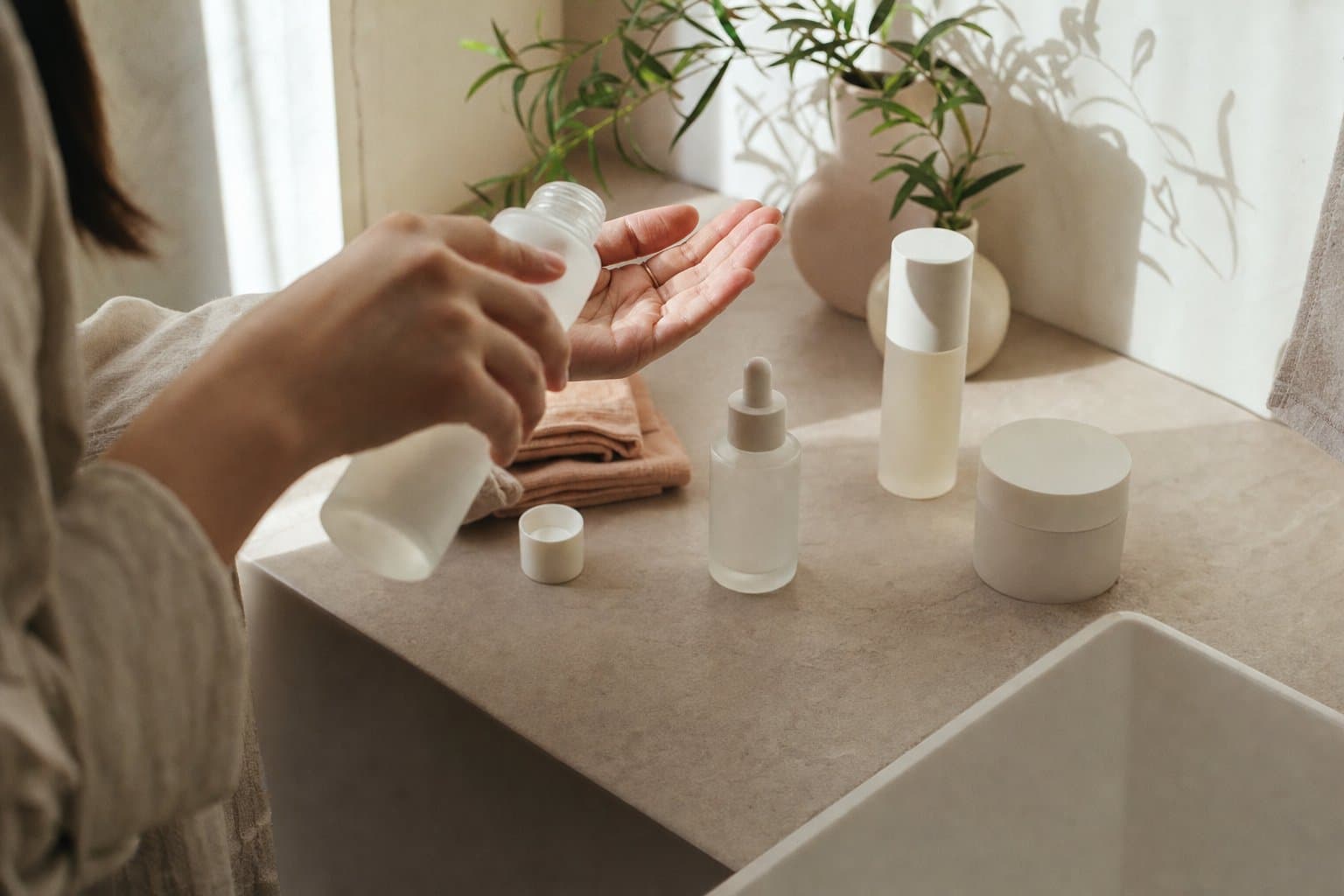
Slow Aging: The Korean Beauty Shift From Fighting Age to Aging Gracefully
Slow Aging is a beauty mindset from Korea and China: not fighting age, but slowing its pace. We unpack the idea—and the sleep, food, and sun-care habits behind it—through Japan's everyday wisdom.
Read more →
How to Minimize Enlarged Pores: The Skin Barrier Turn
Pores top Japan's 2026 skin-concern survey. The global shift: stop stripping, start protecting.
Read more →