
Cozymaxxing: How to Design Comfort at Home (Not Just Feel It)
TikTok's cozymaxxing trend, decoded through Japan's long-standing comfort culture — plus how to design your own.
 By Lukas WeberWriter / Sleep & Wellness, Data Verification·2026.08.05 published·2026.09.06 updated·7 min read·2 sources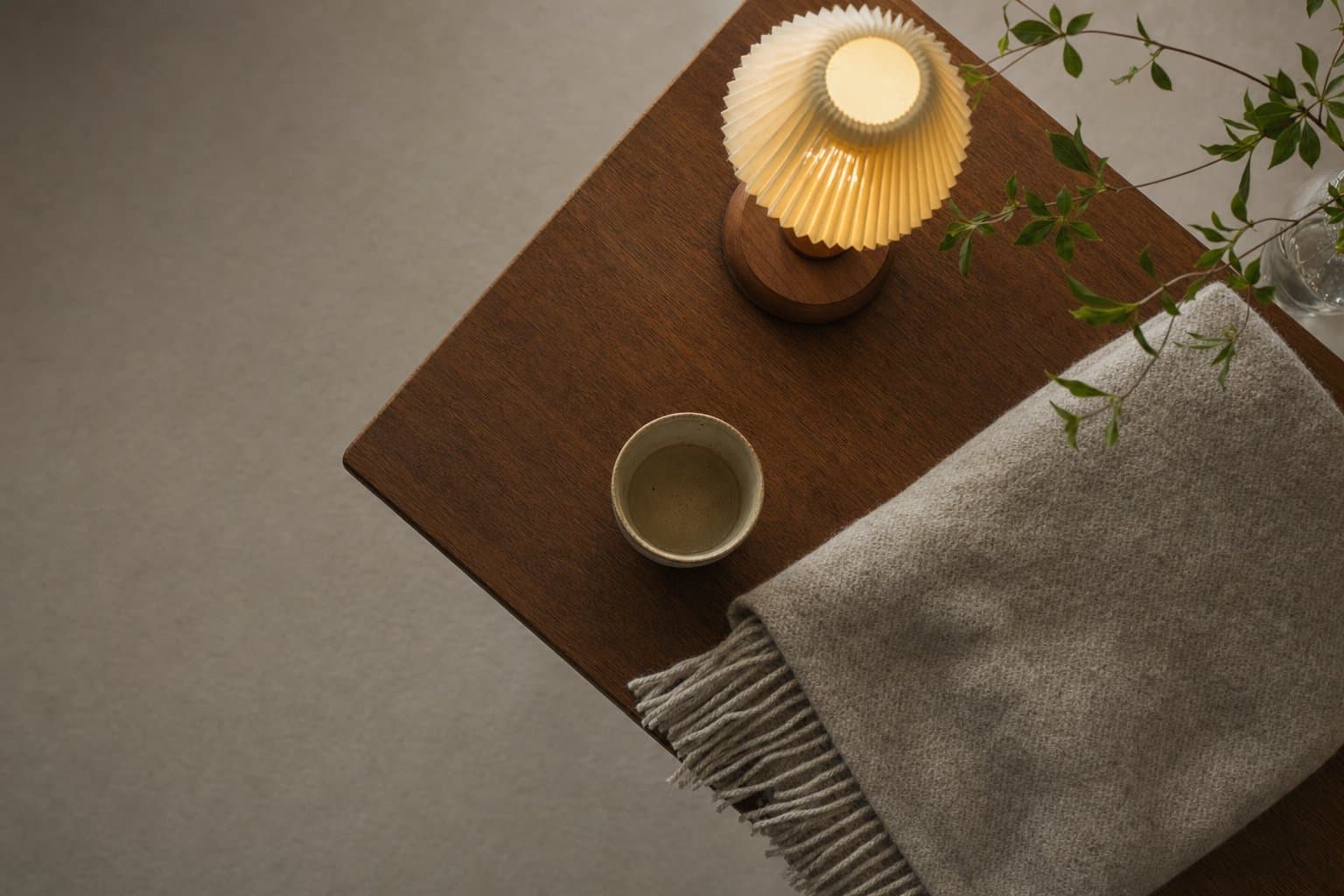
Comfort is not a mood you wait for — it is something you can design. If your room still feels unsettled after you tidy it, or if buying one more cushion never quite lands, the problem usually is not taste. It is that comfort has never been broken into parts you can actually work on. Cozymaxxing, the TikTok-born movement that exploded across the app's Discover page in 2025, treats coziness as an intentional architecture of the home rather than a lucky accident.
The useful move is to stop trying to fix the whole room at once. Split it into three layers instead: bedding, where you spend the most hours; lighting, which sets the emotional temperature of everything else; and texture, the materials your eyes and hands read as warmth. Sequence matters more than budget here, which is why a small apartment can feel better than a large one.
And honestly? Japan has been quietly practicing this for centuries, from kotatsu tables to soft ambient lighting to blinds that change with the season. This piece walks through what cozymaxxing actually means, how to build it in a one-room apartment or a small space, and how to troubleshoot when a room refuses to feel calm.
What is cozymaxxing? The 2025 TikTok trend, explained
Cozymaxxing is the practice of deliberately designing the environmental inputs of comfort — bedding, lighting, materials — so that a room reliably produces a settled feeling instead of occasionally stumbling into one. It is not a decluttering method and not an interior style. The clearest way to hold it: coziness stops being something you hope for and becomes something the room is built to deliver.
The term surfaced on US TikTok in 2025 and quickly earned its own Discover page. Its force comes largely from the Gen Z suffix '-maxxing', which carries a sense of pushing one variable as far as it will go. Attach that to comfort and the framing flips — comfort becomes an active design practice rather than a passive mood or a matter of taste.
Bustle covered it as an ultimate form of self-care; Healthline approached it from the health and wellness side, examining why the trend resonates. Publications from Decorilla to Yahoo Shopping ran practical feature coverage. That split — philosophy on one side, shopping lists on the other — is part of why the idea spread so fast.
In Japan, coverage is nearly nonexistent. Only ELLE, via Yahoo News, has mentioned it, using a slightly different transliteration. But the cultural infrastructure is already here. Hygge landed in Japan around 2016 and stuck, proving there was appetite for imported vocabulary about domestic warmth. Adjacent movements like underconsumption core and soft life share the same DNA — prioritizing experience over acquisition, and treating restraint as a form of luxury rather than a compromise.
So the novelty here is not the feeling itself, which is old and close to universal. It is the decision to design for it, and to treat that design as something worth doing on purpose.
Why Japan was cozymaxxing before it had a name
Kotatsu tables, hot water bottles, light filtered through shoji screens, tatami underfoot, warm hojicha in winter — Japanese domestic culture has always had a seasonal vocabulary for engineering comfort. Summer sudare blinds, winter blankets and indirect lighting. This texture-first sensibility, where the materials you touch generate the warmth rather than the air temperature alone, never really took hold in hardwood-and-central-heating Western interiors.
The difference is not decorative. It is a different theory of where comfort comes from. So when TikTok users treat 'three blankets and a candle' as a revelation, Japanese readers are not importing something new — they are renaming something they already own.
Why does the three-layer split actually work? Because it makes discomfort diagnosable. When a room feels off, most people conclude it is messy and start removing objects. Often the real culprit is a single white overhead fixture holding the entire space in work mode from morning to midnight. With bedding, lighting and texture as separate axes, you can isolate the failure: restless sleep points at the bedding layer, evening agitation points at lighting, and a room that photographs well but feels cold points at texture. Tidying cannot fix a lighting problem, which is why tidying so often disappoints.
One common misreading is worth killing. Cozymaxxing is not an instruction to buy more. The '-maxxing' suffix makes it sound like a stacking contest — more throws, more cushions, more candles — but an over-loaded room adds visual noise and gets less restful, not more. What is being maximized is the quality of the felt experience, not the object count. That is why this movement sits comfortably beside underconsumption core rather than against it.
And if bed rotting legitimized the act of resting, cozymaxxing takes the next step: designing the space that hosts the rest. It is a quiet form of self-care infrastructure.
How to start cozymaxxing: a 3-layer method for small spaces
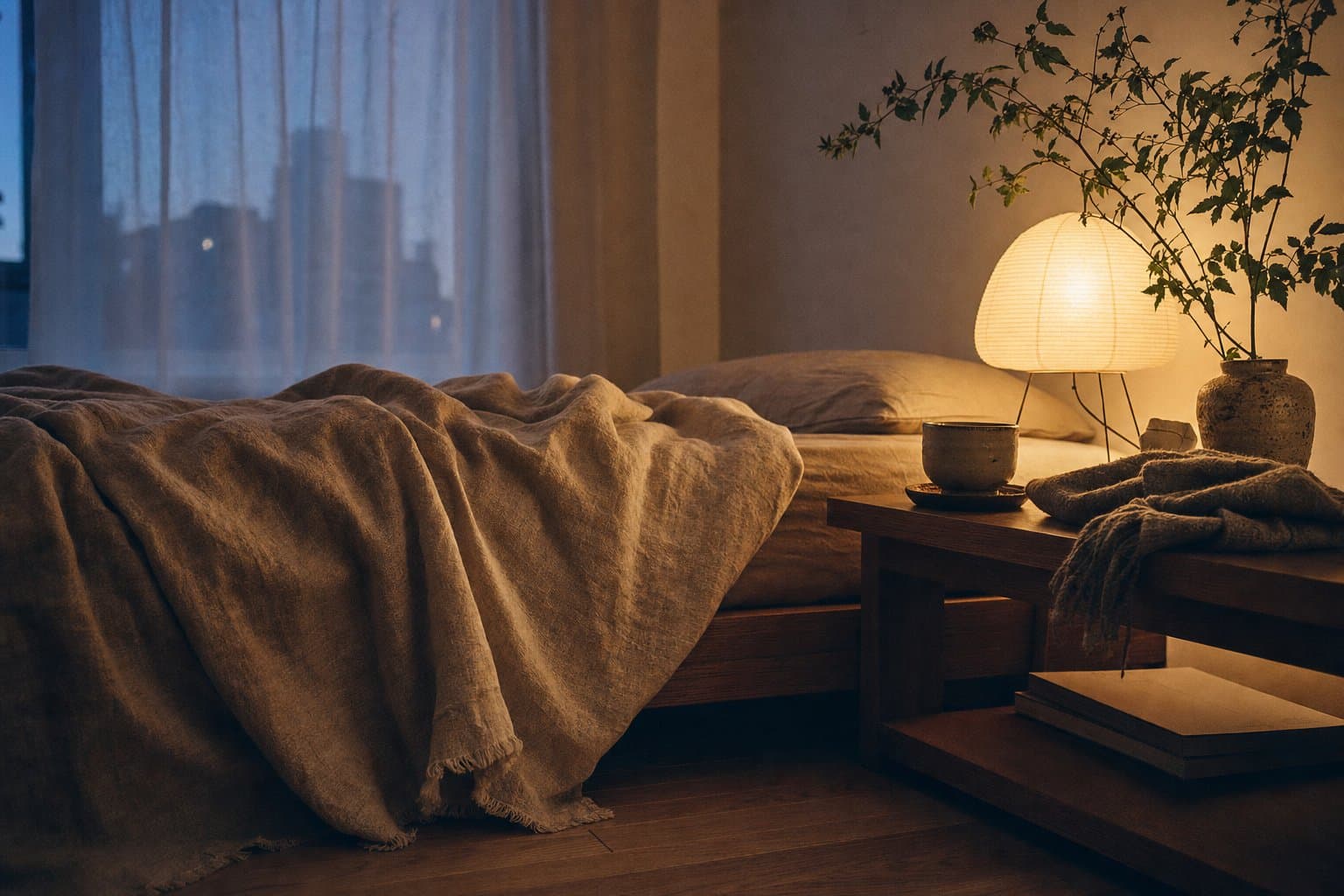
Comfort can be designed in three layers: bedding, lighting, and texture. After organizing published global examples alongside what is actually available in Japan on comparable terms, this sequence looks like the highest-return path. Change one layer at a time and live with it for about two weeks before moving on — simultaneous changes make it impossible to tell what helped.
① **Bedding layer.** Start where you spend the most hours. In a one-room apartment the bed is usually also the chair and the sofa, so its quality sets the ceiling for the whole space. Upgrading a pillow or mattress raises the baseline comfort of the entire room. Ergonomic pillows like the popular Sabakyu pillow — designed to reduce neck and shoulder strain — offer disproportionate return, though fit varies from person to person (this overlaps with sleepmaxxing practice). If pain or poor sleep persists, that is a question for a clinician, not a shopping cart.
② **Lighting layer.** Kill the single overhead fixture. Replace it with a constellation of indirect sources — floor lamps, table lamps, candles. Choose bulbs under 2700K. A few smart bulbs and one good table lamp will move the needle, which makes this the cheapest high-impact starting point. A workable rule: after sunset, keep three or fewer light sources, all below eye level. In a small room, bounce light off a wall or the ceiling instead of adding more fixtures — you get spatial depth without clutter. If evenings feel wired rather than settled, suspect this layer first.
③ **Texture layer.** Layer materials that register on both sight and touch: wool, linen, cotton throws, pile slippers, wooden trays. Aim for at least three tactile materials. In tight spaces, resist floor piles — concentrate on three contact points instead: the back of a chair, the foot of the bed, and whatever is within arm's reach.
Stop adding when another blanket stops producing any lift; past that point the issue is arrangement, not quantity. Extend the logic to what touches your skin and mouth — hydrating skincare such as Orbis U Dot, filtered water from something like every frecious — so comfort runs continuously from the room into the body.
When it is not working, question the order. Lighting and texture handled but still restless? The bedding layer is usually still untouched.
The takeaway: turn coziness from a mood into a system
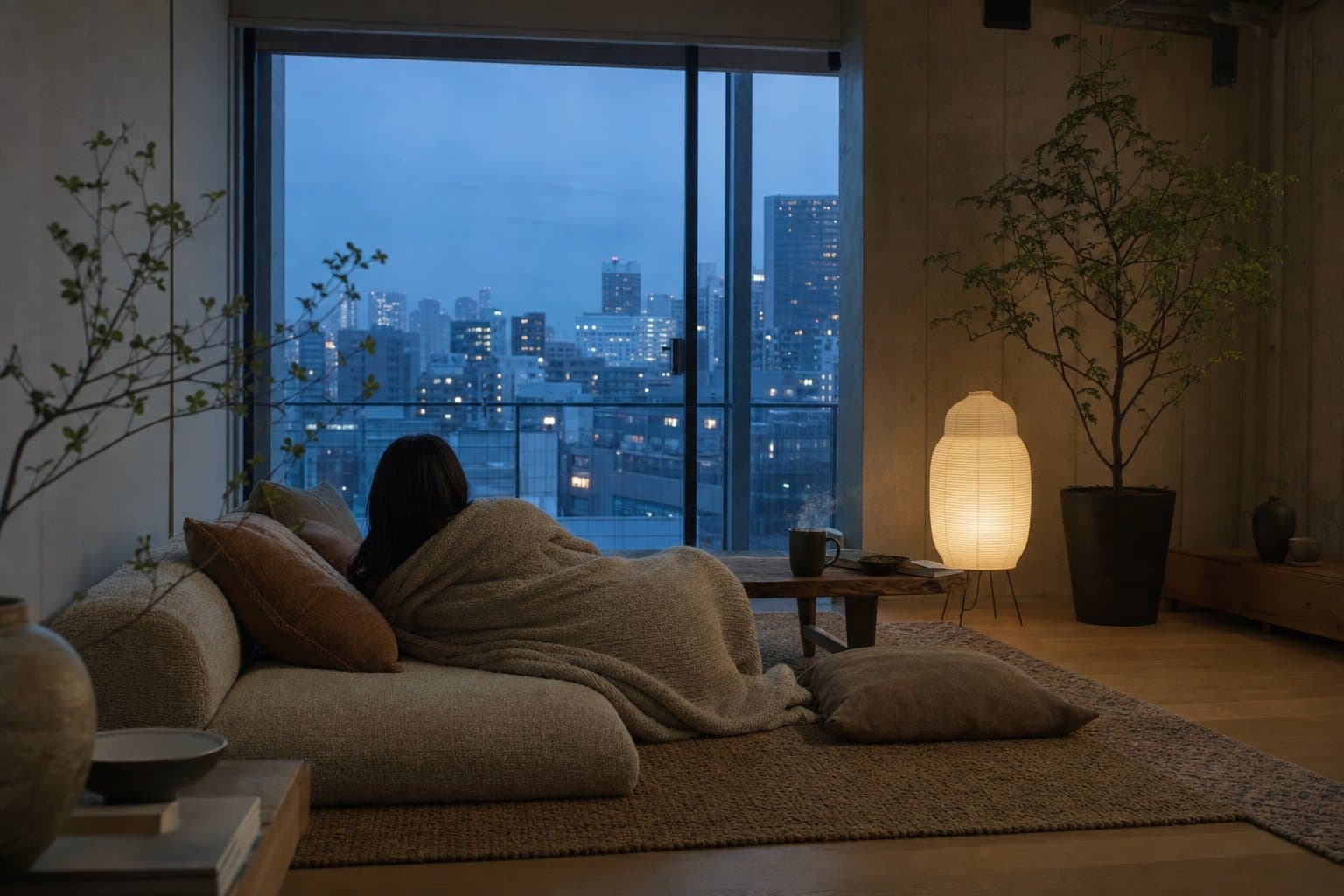
Cozymaxxing gives design language to something Japan has practiced by instinct for generations. The one idea worth keeping: comfort is not the byproduct of tidying, it is the output of three designed layers — bedding, lighting, and texture. So the first step is not renovating a room. It is picking the weakest of the three and changing exactly one thing.
Wired in the evenings? Lighting. Waking up unrested? Bedding. Room looks composed in photos but feels cold to be in? Texture. If you cannot tell, start with bedding, since that is where the hours are. From the public information we organized, bedding (the Sabakyu pillow) and filtered water (every frecious) tend to register fastest simply because they touch you every single day, though how much you notice will vary.
If you are rethinking skincare, Orbis U Dot pairs well with the slow-aging angle. You can compare and sign up for each below. For related lifestyle currents, see soft life and underconsumption core.
FAQ
What do I actually need for a cozy room?
A minimum kit is three things: bedding that fits your body, one small warm-toned light source, and one blanket in a material that reads as warm to the touch. Things you contact daily tend to shift how a room feels more than expensive furniture does. Extra cushions and decorative objects are optional — pile on too many and they become visual noise that works against calm. Start by filling the weakest of the three layers, and only that one.
Does this work in a one-room apartment?
Yes, and often more visibly than in a large home, because a small footprint means each change touches a bigger share of the space. Start from the bedding layer, since in a studio the bed doubles as chair and sofa. Then switch off the single overhead fixture and move to small, warm, below-eye-level lamps. In limited square footage, changing light quality and tactile materials goes further than adding furniture, which mostly costs you floor space you cannot spare.
How do I make a small room cozier without adding stuff?
Change how light lands before you change what is in the room. Bouncing light off a wall or ceiling creates depth without a single extra object. If you do add materials, keep them off the floor and limit yourself to three contact points: the chair back, the foot of the bed, and arm's reach. Once another throw stops adding any lift, the remaining problem is arrangement rather than quantity — and subtraction is a legitimate fix.
How fast will I feel a difference?
Lighting is the fastest lever — many people notice a different atmosphere the same evening they swap bulbs, which is why it is a good first move. Bedding takes longer, since your body needs time to adjust; give it around two weeks before judging. Responses vary from person to person, so treat these as rough expectations rather than promises. If poor sleep or physical pain continues, that is a matter for a healthcare professional, not a room redesign.
How is cozymaxxing different from hygge?
Hygge, from Scandinavia, describes a feeling and a value — warmth, ease, good company — and is mostly about noticing and protecting those moments. Cozymaxxing, which spread from US TikTok in 2025, puts the weight on the act of building the conditions: bedding, lighting, materials. Roughly, hygge names the experience while cozymaxxing names the engineering behind it. In Japan, hygge's earlier adoption is part of why the newer idea reads as familiar rather than foreign.
Where should I start if I only do one thing?
If you are unsure, start with bedding, for the simple reason that it is what you are in contact with longest each day. Lighting is the strong runner-up: it is usually the cheapest layer to change and the quickest to register. Texture is closer to a finishing move — leading with it can make a room photograph better without feeling much different to occupy. Pick the single layer you are most dissatisfied with right now, and change only that.
About this article
This article was written by Lukas Weber (Writer / Sleep & Wellness, Data Verification) of the Tokyo Decoded editorial team, with sources and facts checked by the team. We keep editorial independence from advertisers. See our editorial policy.
Sources
Related
Mattress for Back Pain: How to Rethink Where You Sleep 8 Hours
Back pain tops Japan's health complaints. A practical guide to choosing a mattress by firmness, pressure distribution, and breathability.
Read more →
How to Choose a Pillow: Height Guide by Sleep Position
Nearly 60% feel their pillow doesn't fit. A practical guide to height and material by sleep position.
Read more →
A Guide to the World's Life-Optimization Trends: Sleep, Rest, and Owning Less
Sleepmaxxing, Bed Rotting, Underconsumption Core — a single map of the world's trends for a better-designed life. Sleep, rest, and belongings, tuned by data rather than by feel.
Read more →