
Underconsumption Core: Why Buying Less Is the New Flex
TikTok's #underconsumptioncore hits 230M views. The new flex? Buying less—and Japan's been doing it forever.
 By Lukas WeberWriter / Sleep & Wellness, Data Verification·2026.06.11 published·2026.09.06 updated·7 min read·1 sources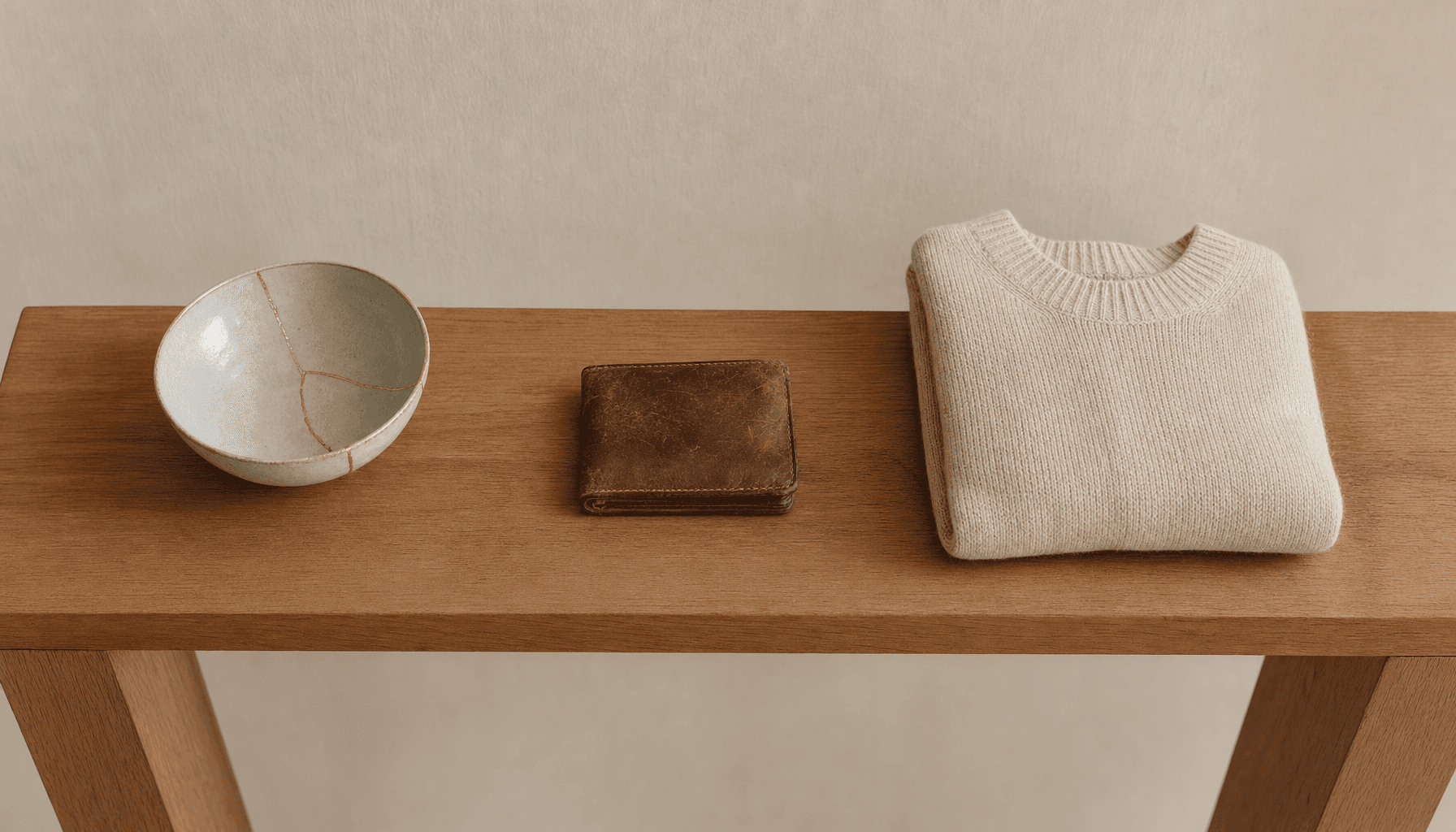
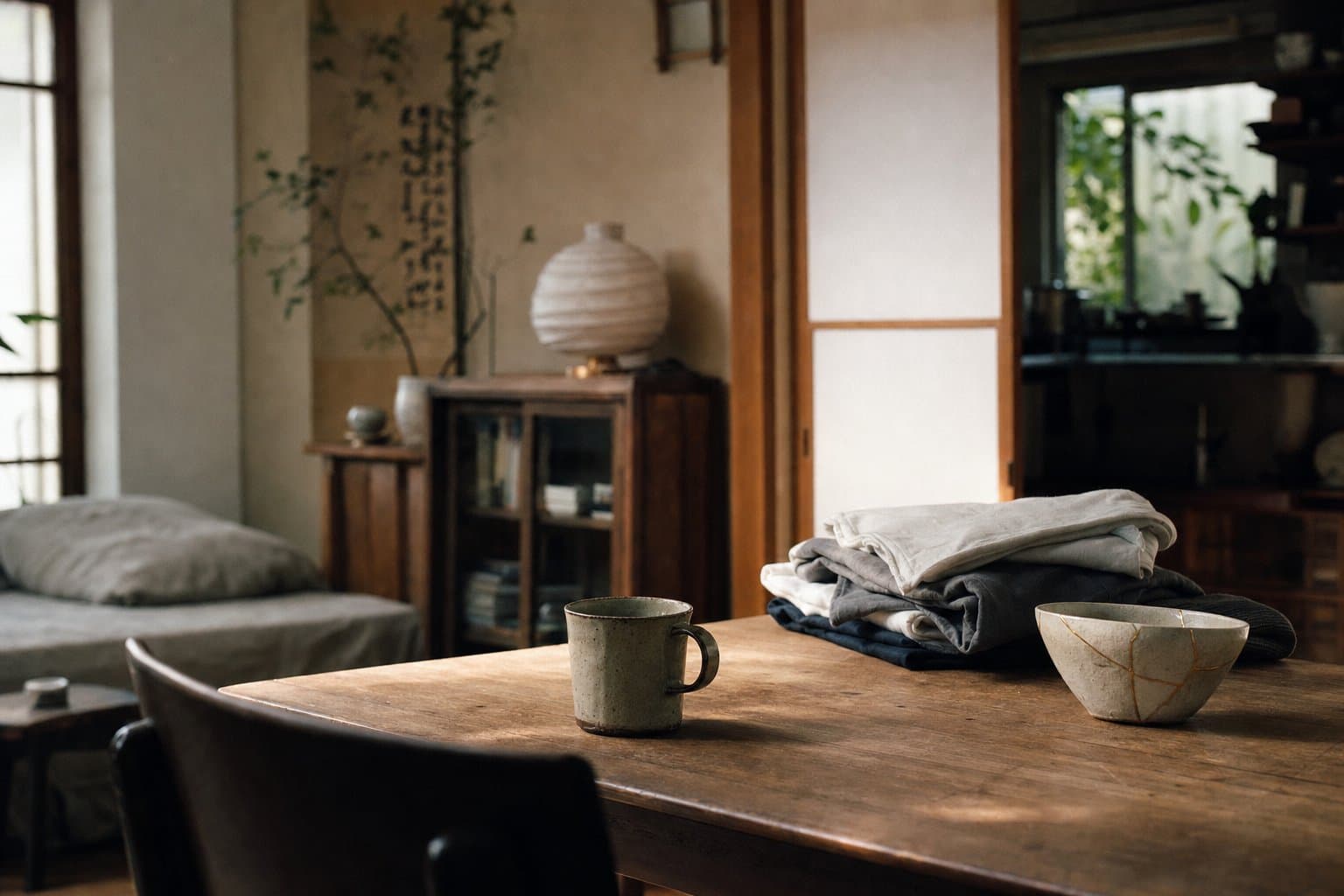
Remember when hauling shopping bags into a TikTok video was the ultimate flex? That era is quietly ending. Enter Underconsumption Core: the aesthetic of using what you already own, proudly displaying your five-year-old mascara tube, your mother's hand-me-down handbag, your slightly chipped mug. It is the antithesis of haul culture, and Gen Z is eating it up.
Born as a backlash against overconsumption and influencer-driven shopping sprees, this movement celebrates the worn, the inherited, and the deliberately mundane. And while it feels fresh on Western feeds, it echoes a sensibility Japan has cultivated for centuries — mottainai, the quiet shame of waste. Suddenly, restraint is the new status symbol, and 'I've had this for years' is the most coveted caption of the year.
This guide walks through the whole arc: what underconsumption core actually means, why the buy-less impulse lands so hard right now, how it maps onto Japanese ideas most of us absorbed without naming them, and what a low-consumption life looks like in practice — with frequencies, realistic timelines, and honest notes on where it tends to fall apart. Not an austerity sermon. A way of repairing your relationship with the things already in your home.
What is underconsumption core? Behind 230M views
Start with the definition. Underconsumption core is the aesthetic of visibly using what you already own — filming the nearly-empty lipstick, the decade-old shelf, the linen shirt softened by years of washing — and treating that accumulated time as the thing worth showing. Where haul culture flexed acquisition, this flexes duration.
The caption is not 'look what I bought' but 'look how long I've kept it.' The numbers tell the story. The hashtag #underconsumptioncore has surpassed 230 million views on TikTok, with related posts growing roughly 400% over the past three months. The core demographic is Gen Z women in their early twenties, and the aesthetic is deliberately unglamorous.
The drivers are clear: inflation fatigue, climate anxiety, and a collective exhaustion with influencer-driven consumerism. Major outlets including Vogue and The New York Times have covered the trend as a generational reckoning with consumption rather than a passing meme, and CNBC approached it from the personal-finance angle — what the trend actually means for your money. Search interest in terms like 'no-buy year' and 'capsule wardrobe' surged in tandem.
Now the Japanese context, which changes how the story reads. Japan did not need TikTok to discover restraint; it had the vocabulary first. Mottainai. Shimatsu, the ethic of using things to their end. A domestic decluttering boom already came and went. So for readers here, this is less an imported trend than a familiar instinct getting a new name and a new format.
The genuine novelty is visibility. Thrift in Japan was traditionally something you practiced quietly, even slightly embarrassed about — a private discipline. Underconsumption core takes the same behavior and makes it public, shareable, and status-bearing. That inversion, not the frugality itself, is what brands, retailers, and economists are starting to take seriously.
Why buying less works: mottainai and wabi-sabi
So why now? At its heart, underconsumption core is a hunger for authenticity. Worn out by curated influencer perfection, young people are finding beauty in the real, the imperfect, the long-loved. Look at the mechanism and it gets clearer. The pleasure of buying peaks at the moment of purchase and then dissolves into ordinary life, which is precisely why it demands a sequel — the only way back to that feeling is another transaction.
The satisfaction of finishing a bottle, mending a seam, or inheriting something that still works behaves differently: it accumulates. The reward does not retreat as you approach it, so you are not stuck chasing. That structural difference is why a low-consumption life tends to be less exhausting than a shopping habit, not more.
The sensibility also maps almost perfectly onto core Japanese aesthetics. Wabi-sabi finds beauty in age, asymmetry, and wear. Kintsugi — repairing broken ceramics with gold lacquer — turns damage into distinction, treating scars as part of an object's story. Chef Yoshiharu Doi's philosophy of ichiju-issai, one soup and one side, reframes minimalism as abundance through subtraction.
And mottainai, the regret of wasting something with inherent value, was introduced globally by Nobel laureate Wangari Maathai in 2005. The aesthetics are new; the philosophy is ancient. One misconception worth killing here: underconsumption core is not a deprivation contest. People who launch into it as pure abstinence are the ones most likely to rebound into a bulk-buying binge weeks later.
Wearing shoes that hurt you, or running out of things you genuinely need, is not the point. The goal is not zero purchases — it is reclaiming authority over the frequency and the reasoning behind them. Simply inserting one question before checkout, could something I already own do this, changes the outcome far more than any rule. Pause, do not prohibit. How much you save, and how satisfying you find it, will vary from person to person.
How to start a buy-less, use-it-up life: 5 steps
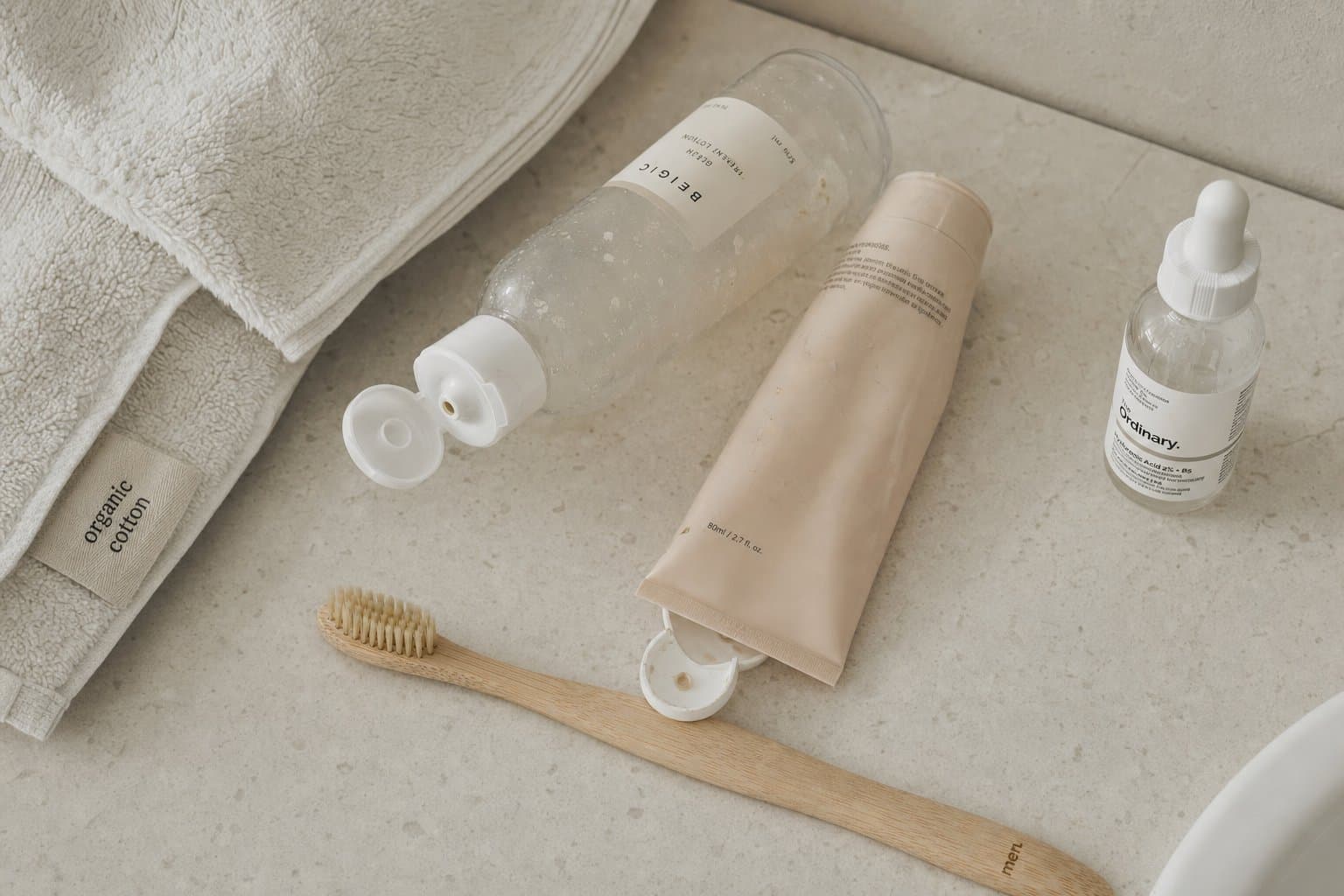
Ready to try it? Here is a sequence you can start tomorrow. ① The use-it-up challenge: finish every product in your home — skincare, detergent, notebooks — before buying replacements. The trick is to pick exactly one category first. Starting everywhere at once reliably collapses within a week. Give it two weeks to a month, long enough to feel the stockpile actually shrink.
The quiet satisfaction of emptying a bottle lasts longer than the rush of unboxing.
- The one-in-one-out rule: for every new clothing item, release one. Holding wardrobe size steady kills impulse buys and decision fatigue at the same time. If you cannot name the item you would release, treat that as a signal to postpone the purchase rather than a puzzle to solve.
- Mend before you toss.
A torn sock, a frayed seam, a chipped bowl — ask whether it can be repaired first. Tokyo neighborhoods like Kuramae and Shimokitazawa have seen a boom in repair cafes, sashiko stitching workshops, and kintsugi classes. ④ Build in a pause: leave the thing in your cart for 3 days. Buy it if you still want it on day 3.
This single delay removes most feed-triggered purchases. ⑤ Do a monthly review: one line each for what you bought, what you finished, and what you repaired. It is not budgeting — it is pattern recognition about yourself. Troubleshooting is straightforward. If you rebound into a binge, your rules are too strict; narrow back to one category.
If you keep drifting off, you may have picked an area that was never actually bothering you — restart where the clutter or the spending genuinely hurts. And if finishing things has become an end in itself, that is your stop signal. Nobody needs to use up a cosmetic that irritates their skin or shoes that hurt to walk in; if a product seems to be causing a problem, stop and consult a professional rather than pushing through.
The goal is not austerity. Reframe it as choosing carefully and keeping longer, and your relationship with your things changes on its own. Where the money you stop spending should go is covered in our kakeibo app comparison and in sinking funds, the method of setting aside predictable irregular expenses month by month.
The takeaway: a low-consumption life, rooted in Japan
Underconsumption core is not a story about deprivation. It is about reclaiming authority over how often and why you buy, and repairing your relationship with what is already in your home. It arrives labeled as a TikTok trend, but sitting as it does on a continuous line with mottainai, wabi-sabi, and ichiju-issai, readers in Japan may find it less like learning something new than like remembering it.
Your first step is small enough to take today: choose one category. The bathroom shelf. The stationery drawer. That is the whole assignment. If you want to go deeper, start with Japanese wisdom. Yoshiharu Doi's Ichiju-Issai: A Proposal for Simple Eating reframes minimalism as nourishment rather than restriction.
Beginner kintsugi kits let you repair broken ceramics at home, turning waste into heirloom. For journaling the process, one well-made notebook — a Midori MD or a Traveler's Notebook — is an object designed to age beautifully with use. The point is not to buy these things instead of others; it is to choose tools that deepen your bond with what you own. That is the Tokyo Decoded take. This week, post one well-worn item you have loved for years, and caption it proudly. That is the new flex.
FAQ
What is underconsumption core?
It is the aesthetic of visibly using what you already own and keeping it for years, filmed and shared rather than hidden. The TikTok hashtag #underconsumptioncore has surpassed 230 million views, growing as a backlash against haul culture. Instead of flexing what you just bought, you flex duration — the worn, the inherited, the almost-empty. Its core audience is Gen Z, especially women in their early twenties.
Does a buy-less life mean buying nothing at all?
No. The goal is not zero purchases but authority over frequency and reasoning. Treating it as a total ban tends to backfire — strict rules are the most common cause of a rebound binge. Buy the necessities you actually need. The habit that does the work is simply asking, before checkout, whether something you already own could do the job. Pause rather than prohibit, and the practice survives past the first month.
Where should I start with a use-it-up life?
Pick one category and only one. The bathroom shelf, the stationery drawer, the food stockpile — ideally wherever clutter or spending genuinely bothers you right now. Attempting every category at once is the single most reliable way to quit within a week. Run it for two weeks to a month, long enough to actually watch the stockpile shrink, then expand to the next category once the first feels automatic.
How much money will a low-consumption life save me?
That depends entirely on your income, household, and starting habits, so no single figure applies. What is structural rather than personal is this: inserting a pause before purchase reliably cuts feed-triggered impulse buys, and repairing or finishing what you own removes replacement purchases. Log what you bought, finished, and repaired once a month to see your own pattern. For actual household budgeting decisions, consult a qualified professional.
How is this different from Japan's mottainai?
The underlying values are nearly identical — mottainai, wabi-sabi, and a long tradition of mending sit on the same line as this trend. The difference is visibility. Thrift in Japan was historically a private discipline, practiced quietly and rarely advertised. Underconsumption core takes the same behavior and makes it public and status-bearing. Mottainai itself went global when Wangari Maathai introduced it in 2005, so in a sense the idea is simply coming home in a new format.
When should I stop using something instead of replacing it?
Stop when finishing things has become the goal in itself and you are enduring something unpleasant to hit it. Cosmetics that irritate your skin, shoes that hurt to walk in, and worn-out gear where safety is involved do not need to be used up. The practice is meant to restore judgment, not to shrink your quality of life. If a product appears to be causing a problem, stop using it and consult a qualified professional rather than pushing through.
About this article
This article was written by Lukas Weber (Writer / Sleep & Wellness, Data Verification) of the Tokyo Decoded editorial team, with sources and facts checked by the team. We keep editorial independence from advertisers. See our editorial policy.
Sources
Related
A Guide to the World's Life-Optimization Trends: Sleep, Rest, and Owning Less
Sleepmaxxing, Bed Rotting, Underconsumption Core — a single map of the world's trends for a better-designed life. Sleep, rest, and belongings, tuned by data rather than by feel.
Read more →
No-Buy 2026 Mid-Year Reset: Rebuild Your Challenge with Systems, Not Willpower
Failed your No-Buy year? July is the reset point. 44% of Americans are trying it—here's how to rebuild.
Read more →
Bed Rotting: Is Lying in Bed Doing Nothing Actually Good for You?
Spending intentional time in bed doing nothing was Dictionary.com's notable new word for 2023. Gen Z calls it Bed Rotting. Neuroscience calls it Default Mode Network activation. Japan calls it 'tasogare.'
Read more →