
Skin Flooding: The K-Beauty Layering Method for Dehydrated Skin
How Skin Flooding — the K-beauty hydration layering method — translates for Japan's dry-season skincare.
 By Jiwoo SeoSocial Media / Beauty & Skincare·2026.08.07 published·2026.09.07 updated·7 min read·1 sources
Dry skin often isn't short on product — it's short on sequence. If you've ever felt tight and flaky by late afternoon despite a full shelf of moisturizers, the culprit may not be your products but the order and timing you apply them. Skin Flooding, a K-beauty layering method that took off on English-language TikTok in 2024 and has since been reviewed by dermatologists, rearranges those steps rather than adding new ones.
The instruction is deceptively small: after cleansing, leave the skin damp, press toner on in two or three passes, add a humectant serum before the surface dries, and only then seal with cream or oil. Nothing new enters your bathroom cabinet; what changes is the interval between steps. In Japan, layering toners — kasaneuke — is already a familiar habit taught by domestic brands, but the Korean framing gives it a clearer logic, especially for dry winters and air-conditioned rooms.
This piece works through the whole sequence: what the method actually is, why damp skin matters mechanically, how the night routine differs from the morning one, where facial oil belongs, and the honest answer to the most common objection — that layering toner is just a marketing habit with no real effect. Everything below is drawn from published sources rather than personal testing.
What Is Skin Flooding? The Hydration Order, Explained
Skin flooding is a layering sequence: cleanse, keep the skin damp, press on toner or essence, layer a humectant serum before the surface dries, and seal the whole thing with a cream or a facial oil. The humectants usually named are hyaluronic acid, glycerin and polyglutamic acid — ingredients that hold water rather than add oil. But the defining feature is not the ingredient list. It is the timing rule: never let the face dry fully between steps.
The term arrived through English-language social media and was then formalised in dermatology-adjacent publishing. Modern Aesthetics ran Skin Flooding: A Dermatologist's Guide to the Latest Hydration Hack in its May/June 2024 issue, presenting the routine as a way to support water retention in dry and sensitive skin. That combination — a social-media coinage picked up and tidied into a procedure by clinical media — is largely why the phrase stuck rather than cycling out with the next hashtag.
Japanese-language search demand for the katakana rendering remains essentially zero. What Japan already has is a mature vocabulary for the same behaviour. Queries like kesyousui kasanezuke (layering toner) and hoshitsu junban (moisturising order) return guides from domestic manufacturers including Kose Hadabisei, and the gesture of pressing toner into the face in several passes with the palms is close to universal here — most people learned it without ever seeing it named.
So the honest framing for a Japanese reader is not that a new Korean technique has arrived. It is that a familiar technique has finally been given a rationale and a stopping rule. The value of the imported vocabulary is diagnostic: it tells you which step you are skipping when your routine stops working, and it makes the sequence teachable rather than intuitive.
Why the Order Works in Dry Winters and Aircon
Winter humidity in Tokyo regularly drops below 30%, and year-round air conditioning compounds the effect. In such dry air, water evaporates from the skin faster than a single moisturizer can hold it. In a heated room, the face can begin drying within moments of towelling off — which means that by the time many people reach for toner, the surface they are treating is already no longer damp.
The core idea of skin flooding — layer the next product while skin is still damp — works because humectants bind more water when the surface itself is wet, and an occlusive final step slows evaporation. Applied to a dry face in a dry room, a humectant has less water available to hold, which is why the same serum can feel generous in a humid August and thin in a January office.
This is also where the most common objection gets resolved. You will see claims that layering toner is pointless. That is half right. Toner layered without a final occlusive step will largely evaporate, taking the effort with it — the criticism holds against unsealed layering, not against layering as such. Skin flooding builds the cream or oil into the sequence precisely to close that gap, which is why the last step is not optional decoration but the part that makes the earlier ones count.
A second distinction worth keeping: more product is not the same as more passes. Skin can only take up so much at once, and an oversized pour mostly runs off along the jaw. Two or three smaller passes re-establish a damp surface each time, which is the state the next layer needs.
None of this is a departure from Japanese habits; it is essentially a re-articulation of the long-standing kasaneuke practice with sharper sequencing. It also sits neatly alongside the barrier-first movement we mapped in our 2026 global beauty trends overview.
How to Do It — 5 Steps, Night and Oil Included
The key rule: don't let skin dry fully between steps.
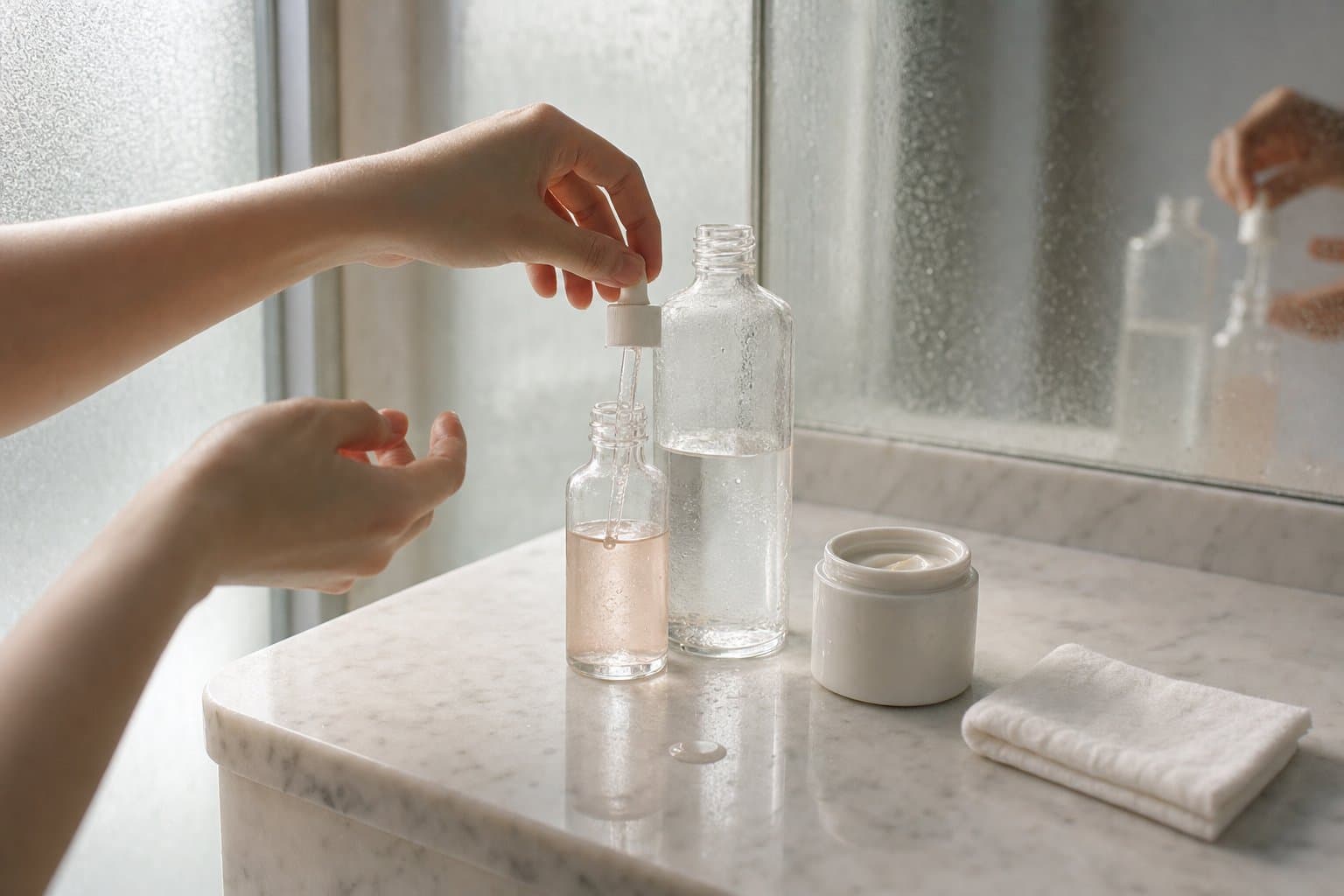
①After cleansing, pat with a towel only lightly — leave skin damp. Rubbing the face dry removes the premise of the whole method; ideally you move to the next step before leaving the sink.
②Press toner or a hydrating mist across the face with your palms; be generous, and press rather than rub.
③While skin is still wet, layer a humectant serum (hyaluronic acid, glycerin, polyglutamic acid). On very dry days, apply in two or three passes. There is no universal correct number — it shifts with season and room humidity — so the practical stopping rule is the moment tightness disappears. More passes are not automatically better.
④Seal with a cream to lock in water. Skipping this step wastes the ones before it. If aging concerns matter to you, consider ceramide-based formulas — see our slow aging piece.
⑤Finish with SPF in the morning, or one to two drops of facial oil at night. Oil does not add water; it holds water in, which is why it belongs after the water-based layers rather than before them.
Morning and night are not the same routine. At night you can afford more passes and an oil finish. In the morning, sunscreen and makeup sit on top, so heavy occlusives tend to make everything slide. A workable split: keep mornings lean, put the weight into the evening.
Troubleshooting is mostly a matter of isolating which step failed. If skin feels good immediately after application but tight a few hours later, the sealing step in ④ is likely too light. If it stings on contact, that is a product-compatibility issue rather than a sequencing one — stop and reassess. If skin stays greasy and tight at the same time over a sustained period, adding more steps on your own is less useful than asking a dermatologist.
If your shelf does not already cover the sequence, a trial kit that runs from toner through moisturiser lets you test the method as written. **Orbis U Dot**, aimed at dryness and early aging concerns, is one set built that way. Individual results vary; patch-test first and stop use if irritation occurs.
The Takeaway: Order Over Volume, Starting Tonight
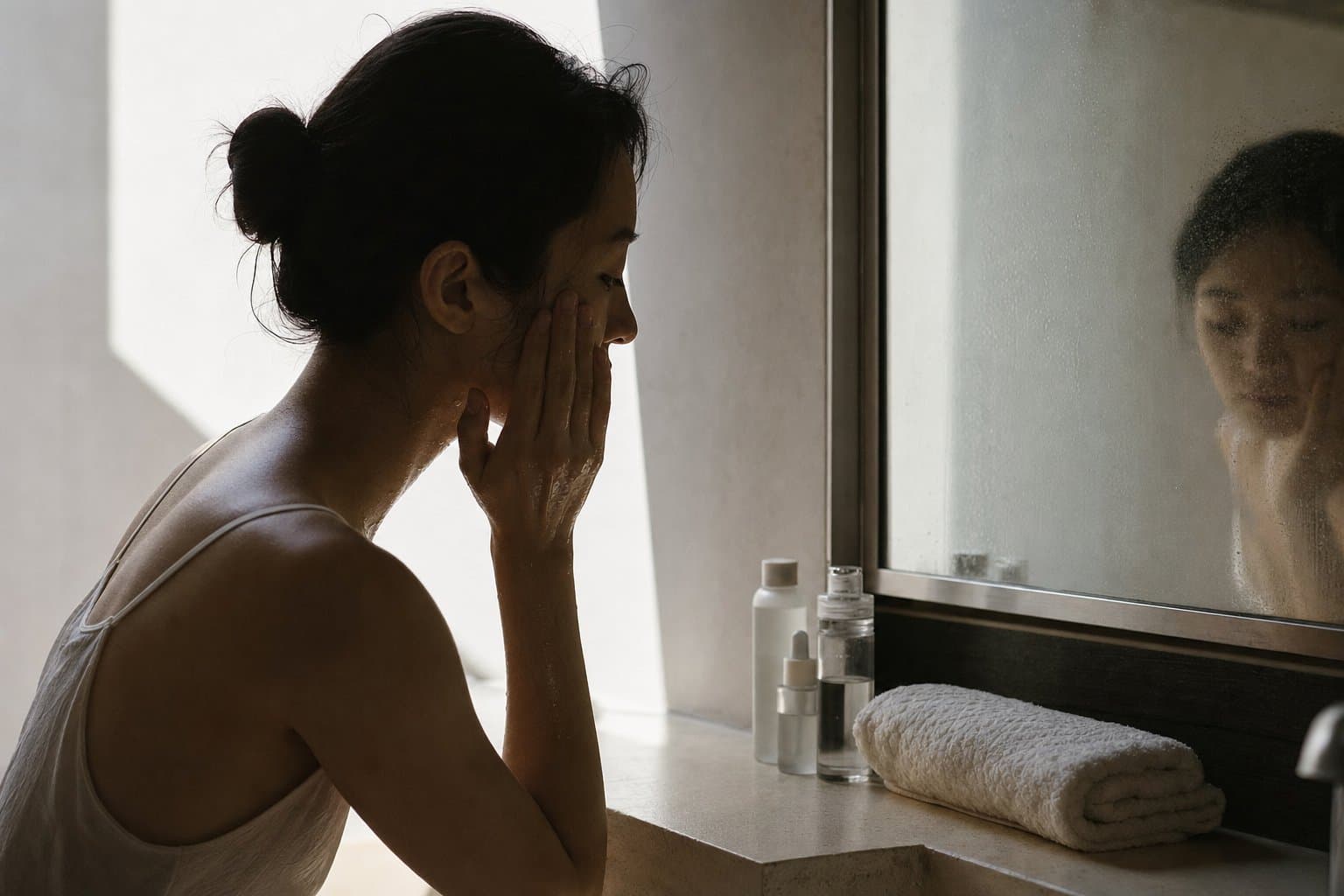
Skin flooding asks you to rearrange, not restock. Three things carry the method: don't towel the face dry, add toner in passes rather than in volume, and always finish with an occlusive. Only when all three are present does layering become a step that earns its place in the routine.
Try it tonight: pat lightly after cleansing, layer toner two or three times, seal with cream while skin is still damp. Judge it over about two weeks of the same sequence rather than a single evening — dry-season skin rarely turns around overnight. If your current lineup still leaves you tight, the Orbis U Dot trial set (linked below) offers a coherent layered sequence to test the method without a full routine overhaul.
Skin varies and results differ from person to person — start small, patch-test, and consult a dermatologist for persistent irritation. For the wider context, see our slow aging and 2026 beauty trends pieces.
FAQ
What is the correct order for moisturising?
Move from the most water-based product to the most oil-based one. After cleansing, apply toner while skin is still damp, follow with a humectant serum, then seal with cream. In the morning, sunscreen goes last. The rule that matters most is not letting skin dry fully between steps. If dryness persists despite correct ordering, the sealing step is the usual weak point. Results vary between individuals.
Should the night routine differ from the morning one?
In practice, yes. At night nothing goes on top, so extra toner passes and a finishing oil cause no problems. In the morning, sunscreen and makeup sit over everything, and heavy occlusives make them slide. Keeping mornings lighter and putting the weight into the evening is the easier split for most routines. Adjust to season and how dry your skin actually feels.
Where does facial oil belong in the sequence?
Last, after the water-based steps. Oil does not add water to the skin; it slows the loss of water that is already there, so it works best over a face that has just been hydrated. Applying oil to fully dry skin gives it little to hold. One or two drops at night is the easiest way to use it. In the morning, judge it against how your sunscreen sits on top.
Is layering toner actually pointless?
Half true. Toner layered without a final occlusive largely evaporates, so the criticism lands against unsealed layering rather than layering itself. Skin flooding places a cream or oil at the end specifically to close that gap. If you layer toner, treat the sealing step as part of the same action rather than an optional extra — that is what turns the earlier passes into something the skin keeps.
How many times should I layer toner?
There is no fixed number. It depends on season, room humidity and your own skin. Guides commonly suggest two or three passes on very dry days, but more is not automatically better. The practical stopping point is when tightness across the cheeks disappears. Splitting a smaller amount into several passes re-establishes a damp surface each time, which works better than pouring more at once. Individual needs vary.
How long before skin flooding shows results?
It varies from person to person, and no immediate result can be promised. The after-application comfort is obvious straight away, but whether skin stays comfortable through the day is better judged after roughly two weeks of the same sequence. If comfort fades within hours, the final sealing step is the likely gap. Stop use and speak to a dermatologist if irritation or itching appears.
About this article
This article was written by Jiwoo Seo (Social Media / Beauty & Skincare) of the Tokyo Decoded editorial team, with sources and facts checked by the team. We keep editorial independence from advertisers. See our editorial policy.
Sources
Related
A Field Guide to Global Beauty Trends: From Slow Aging to Quiet Luxury
Slow Aging, Quiet Luxury — a single map of global beauty trends. Not the buzzy ingredients or brands, but the shift in beauty values behind them, read through data.
Read more →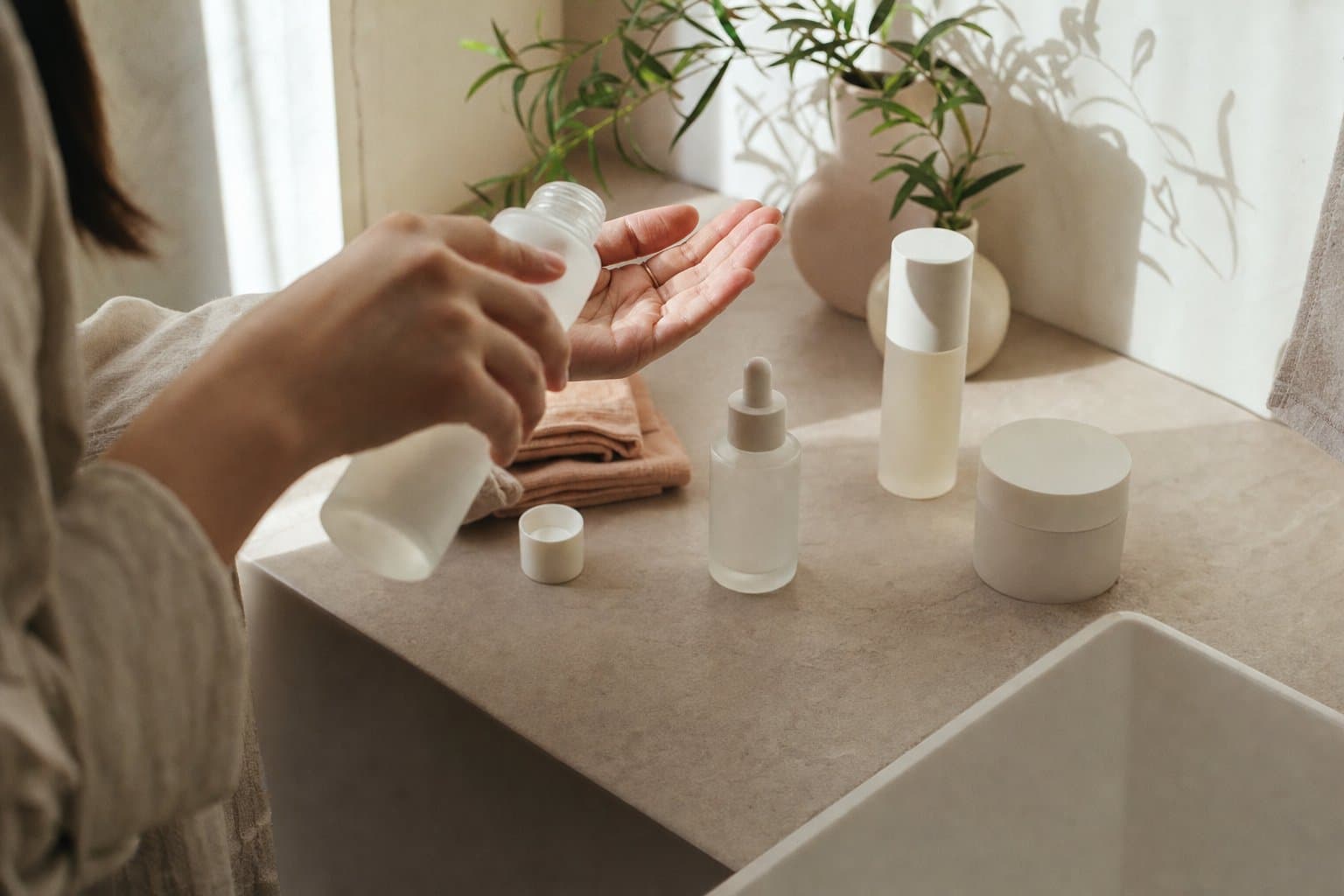
Slow Aging: The Korean Beauty Shift From Fighting Age to Aging Gracefully
Slow Aging is a beauty mindset from Korea and China: not fighting age, but slowing its pace. We unpack the idea—and the sleep, food, and sun-care habits behind it—through Japan's everyday wisdom.
Read more →
After-Sun Care in Japan: What to Do in the First 72 Hours
The first 72 hours after sunburn matter most. Here's how to cool, hydrate, and protect—step by step.
Read more →