
After-Sun Care in Japan: What to Do in the First 72 Hours
The first 72 hours after sunburn matter most. Here's how to cool, hydrate, and protect—step by step.
 By Jiwoo SeoSocial Media / Beauty & Skincare·2026.08.21 published·2026.09.07 updated·7 min read·2 sources
That evening-after-the-beach feeling—when you glance in the mirror and wince—is universal. Your forearms look faintly pink, the shower water stings more than it should, and your usual lotion prickles when it touches your cheeks. By the time those signals appear, your skin is no longer running normally.
But the real work starts now. What you do in the first 72 hours shapes how quickly your skin settles down, and how much dryness or dullness lingers afterward. The common instincts are the wrong ones: reaching straight for a brightening serum, layering on heavier makeup to hide the redness, or scrubbing in the shower to reset.
Each of those adds load to a barrier that is already struggling. Take a breath, and let's walk through the right order instead. This guide maps out a three-day roadmap for after-sun care, grounded in general dermatological principles—and it answers the questions people actually type into a search box: how long redness tends to last, what to look for on a drugstore shelf, what changes for men's skin, and which lotion textures are easier on a stinging face. Nothing here replaces a dermatologist when symptoms are severe, but it gives you a sequence to follow tonight.
What after-sun care is—and why UV doubled
After-sun care means treating freshly sun-exposed skin as something closer to a mild burn than to normal skin, and walking it through three stages—cool, hydrate, protect—while the acute phase passes. The goal is not to erase pigment or reset your skin tone. It is to reduce the load on skin while inflammation is still running, and to stop dryness and barrier loss from compounding. That reframing matters, because it changes what belongs in your hand: defensive products, not aggressive ones. Skip that premise and a well-intentioned routine turns into an irritant.
The background is that Japan's UV environment itself has shifted. According to Nikkei's reporting, days with a 'very strong' UV index have doubled over 35 years, and as air pollution improved, more UV has been reaching the ground rather than less. Reports based on Japan Meteorological Agency observations point the same way: days at 'very strong' or above have doubled over the past 30-plus years.
On March 31, 2025, the Japan Weather Association published its 'UV Extreme-Caution Front 2025,' extending warnings across wide regions from early April. UV levels peak in July and August, and September's lingering heat still delivers intensity comparable to April.
In other words, summer-only vigilance no longer covers the calendar. Positioned within daily life in Japan, after-sun care behaves less like an emergency protocol and more like a habit that switches on intermittently from spring through autumn. The exposures that catch people out are rarely the beach days—they are the commute, the walk to the station at midday, hanging laundry on the balcony, standing on a school field for an hour.
Sunburned skin has lost water and compromised its barrier. That is precisely why sequence and timing, rather than product spend, do most of the work in the days that follow.
Why 72 hours—and how long redness lasts
Right after exposure, inflammation is still unfolding beneath the surface. The stinging, redness, and warmth you feel are its signals. This acute phase generally lasts 24 to 72 hours, and how you respond inside that window influences how smoothly your skin moves toward recovery.
That timeline also answers one of the most searched questions: how long does the redness last? Viewed through the acute phase, redness is typically most visible on the day of exposure and the day after, then eases gradually. But the range is wide. It depends on how much UV you took, which body part it landed on, and how reactive your skin already is—so some redness can linger for several days, and results vary from person to person. What is not a waiting game: severe swelling, blistering, fever, or intense pain. Those warrant a dermatologist rather than another night of home care.
One misconception is worth dismantling here. Many people in Japan assume that because summer air is humid, moisturizing is optional. The opposite holds. Humid air and a well-hydrated stratum corneum are two different things. Sweat and UV pull water out of the surface layers, leaving skin dry underneath even while the surface feels sticky. That sticky feeling is sebum, not proof of hydration. Constant transitions between air-conditioned interiors and hot outdoors accelerate water loss further, which is why summer skin in Japan can behave more like winter skin than people expect.
Mechanically, the three steps do different jobs. Cooling settles heat and discomfort. Hydration returns water and supports the barrier as it rebuilds. Protection keeps you from stacking a second round of damage onto skin that is still mid-repair. They are sequential, not interchangeable: pushing concentrated actives into skin while inflammation is high asks a compromised barrier to process something it cannot handle yet. Cool first, hydrate next, protect throughout—held for 72 hours, that structure is the shortcut, even when it feels like the slow route.
How to do after-sun care: a 3-day plan
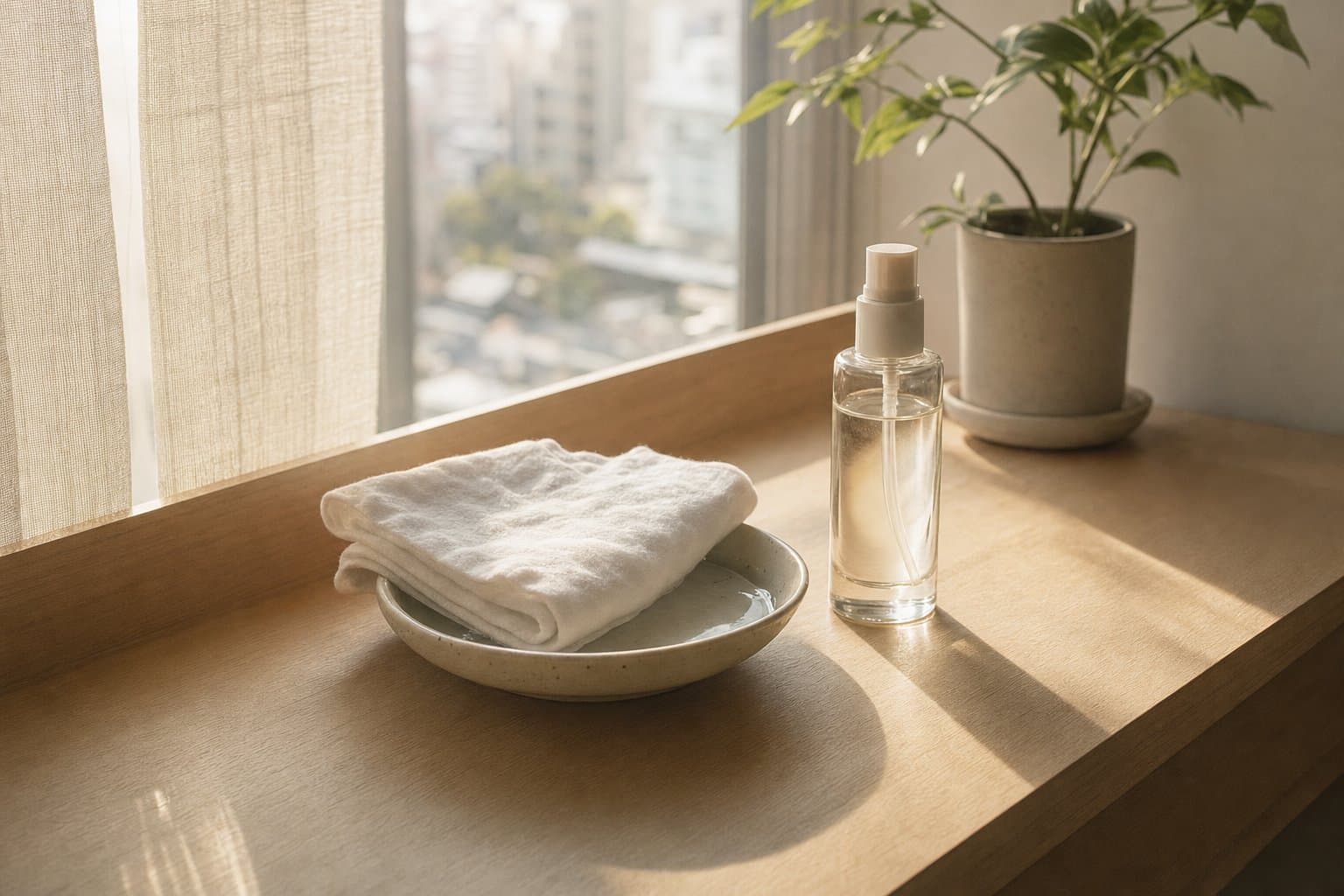
① Hours 0–6, Cool. Priority one is releasing heat. Apply a cold, damp towel or an ice pack wrapped in cloth to red areas for 10–15 minutes at a time, resting between rounds and repeating a few times. Never press ice directly onto skin. Skip the bath; keep showers lukewarm and brief. No scrubbing with soap, and pause exfoliants, scrubs, and brightening actives entirely. The signal to move on is simple: the area no longer feels hot to the touch and the stinging has faded.
② Hours 6–48, Hydrate. Once inflammation eases, shift to simple hydration. Three selection criteria help on a crowded drugstore shelf: low-irritation formulation, a short ingredient list, and restraint on common irritants such as alcohol and fragrance. Sensitive-skin ranges like Curél Intensive Moisture Gel Lotion or MINON Amino Moist Moist Charge Milk are easy to reach for under those criteria.
On the question of which lotion to use while skin is still red, many people find that thicker gel or milk textures sting less than light, alcohol-forward toners. If a product still prickles on application, stop using it—reactions vary from person to person. The idea of layering thin applications of hydrating lotion, discussed in our layered moisturizing guide, helps restore water gradually. Morning and night is enough as a baseline, with an extra pass during the day only if skin feels tight.
③ Hours 48–72, Protect. When heading outside, reapply sunscreen rather than relying on the morning coat. A gentle formula like Anessa Mild Milk suits reactive skin. Combine it with a hat, a parasol, and UV-cut layers so these three days close without a second burn. For men the sequence is identical, with one adjustment: freshly shaved skin is more reactive, so consider skipping a day of shaving after a burn, or switching to an electric shaver to reduce load.
If things are not improving—redness that will not settle, strong pain, or blistering—treat that as outside the scope of home care and see a dermatologist first.

The takeaway: after-sun care is sequence
After-sun care is not about assembling special products. It is about honoring the cool-hydrate-protect sequence across 72 hours. While redness is present, pause the aggressive steps and stay defensive; that single decision changes how much dryness and roughness lingers once the acute phase passes. And because September UV in Japan still matches April levels, this rhythm works as a season-long foundation rather than a midsummer patch.
The first step can be very small. Tonight, set out a cold cloth and a low-irritation moisturizer where you will actually see them. If you are restocking at a drugstore, long-trusted sensitive-skin brands like Curél, MINON, and Anessa are worth revisiting under the three criteria above. Compare formulas and textures from the related products below, and remember that comfort and results vary from person to person—if something stings, stop rather than pushing through.
Zooming out, our 2026 global beauty trends guide shows that care assuming exposure is now mainstream. How you handle the days right after a burn is what shapes next year's skin.
FAQ
How long does redness last after a sunburn?
The acute phase after sun exposure generally runs 24 to 72 hours, with redness usually most visible on the day of exposure and the following day, then easing gradually. The range is wide, though: how much UV you took, which body part it hit, and your skin type all matter, and some redness can linger for several days. Results vary from person to person. If you see swelling, blistering, or feel severe pain, see a dermatologist rather than waiting it out.
What products are good for after-sun care?
The useful answer is a selection rule rather than a single product name. Look for low-irritation formulation, a short ingredient list, and restraint on alcohol and fragrance. Sensitive-skin lines that have been trusted for years, such as Curél and MINON, are straightforward to evaluate against those three criteria. While redness is still strong, pause brightening and exfoliating products and keep the routine defensive. Comfort and suitability vary from person to person, so stop anything that stings.
What should I look for at a drugstore?
Three checks work in front of the shelf: is it labeled for sensitive skin, is the ingredient list short, and are alcohol and fragrance kept in the background. For texture, gels and milks that spread with little friction are easier on tender skin than products you have to rub in. Pick up a cold pack and a clean towel in the same trip so you can start cooling the same night. If something does not agree with your skin, stop using it, and ask a pharmacist or dermatologist when symptoms are strong.
Can I use toner while my skin is still red?
You can, but it makes sense to change what you reach for. Light, alcohol-forward toners tend to sting on compromised skin, while thicker gel or milk textures feel gentler to many people. Warm the product in your palms first, then press it onto the skin instead of rubbing or wiping. If it still prickles on contact, stop and wait until the skin has settled before resuming. Sensations differ from person to person, so treat your own reaction as the deciding signal.
What changes for men's after-sun care?
The sequence is the same—cool, then hydrate, then protect. The practical difference is shaving. Freshly shaved skin is more reactive, so consider skipping a day after a burn, or switching to an electric shaver to reduce the load if you must shave. For hydration, lighter gel textures are usually easier to live with than heavy creams, and the reapplication rule for sunscreen applies exactly as it does for anyone else heading back outdoors.
What should I avoid right after a sunburn?
Avoid pressing ice directly onto skin, hot baths and saunas, scrubbing with soap, and rushing back to exfoliating or brightening actives. Heavy makeup applied to camouflage redness also adds load, mostly because removing it means more friction on tender skin. During the 24-to-72-hour acute phase, keep the routine strictly defensive and let the skin settle. If blisters appear or the pain is severe, prioritize seeing a dermatologist over any home routine.
About this article
This article was written by Jiwoo Seo (Social Media / Beauty & Skincare) of the Tokyo Decoded editorial team, with sources and facts checked by the team. We keep editorial independence from advertisers. See our editorial policy.
Sources
Related
Skin Flooding: The K-Beauty Layering Method for Dehydrated Skin
How Skin Flooding — the K-beauty hydration layering method — translates for Japan's dry-season skincare.
Read more →
A Field Guide to Global Beauty Trends: From Slow Aging to Quiet Luxury
Slow Aging, Quiet Luxury — a single map of global beauty trends. Not the buzzy ingredients or brands, but the shift in beauty values behind them, read through data.
Read more →
When to Start Anti-Aging Skincare: The Right Timing
When to start anti-aging skincare? A data-backed guide to timing, order, and ingredient choices.
Read more →