
Heat Shock and Japanese Bath Safety: Three Numbers for Winter
In Japan, winter bathtub deaths outnumber traffic fatalities. A cost-free-first checklist from official data.
 By Lukas WeberWriter / Sleep & Wellness, Data Verification·2026.10.05 published·2026.10.05 updated·5 min read·2 sources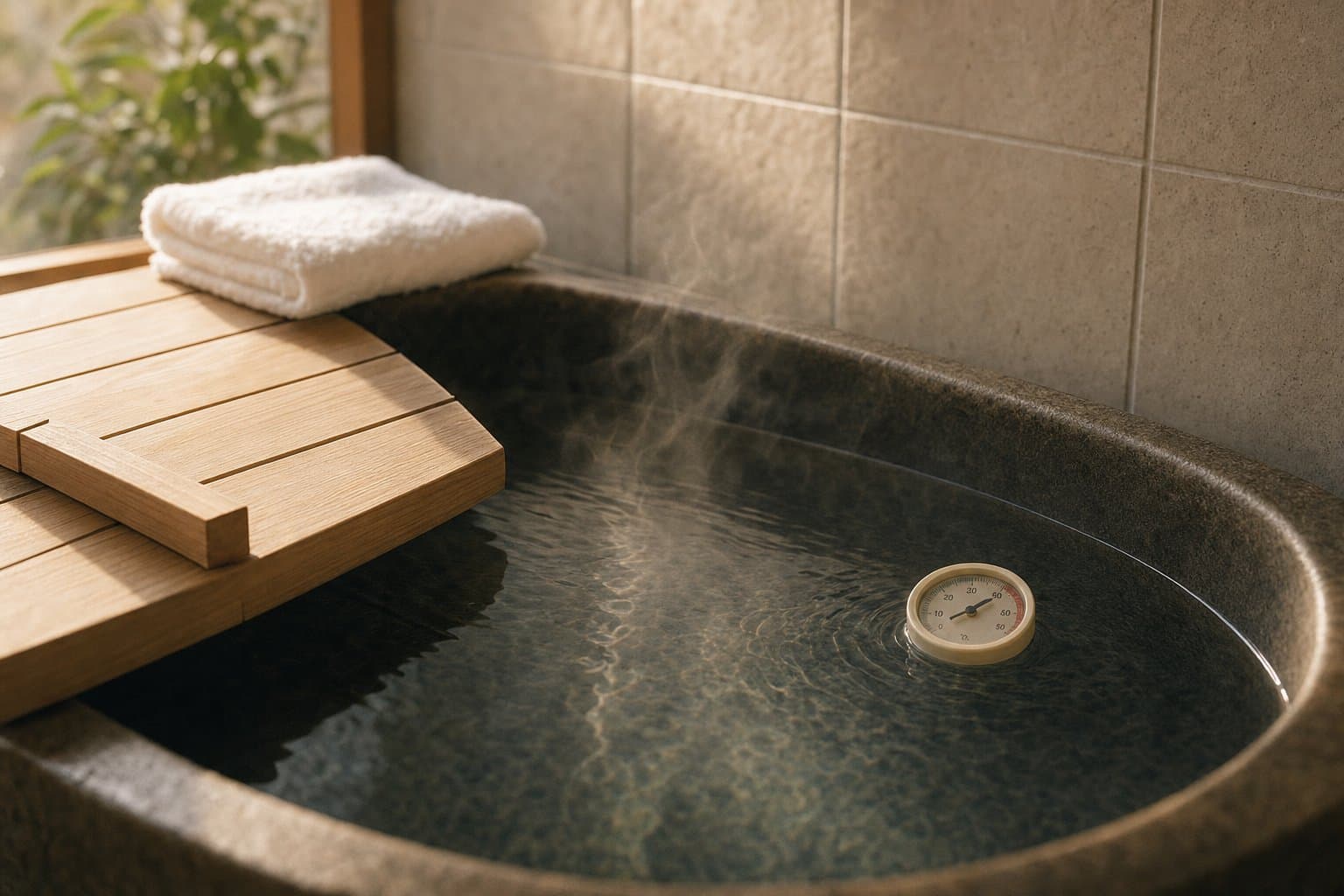
Picture the bathroom in your parents' house. The air drops a degree the moment you step into the changing room. You undress, shoulders tightening. Then you lower yourself into water hot enough to make you exhale out loud — that sigh of relief. In Japan, that exact sequence is where the most people die each winter.
The habit of very hot water and a long soak worked on a younger body. It does not work the same way now. And if you live alone in a rented apartment with an unheated changing room, you are standing in the same conditions.
This article does not open with equipment. It starts with what costs nothing tonight, then works outward to what costs money. Read it as a packing list for the next time you go home and inspect the bath your parents use every day.
Start with the numbers. In a November 19, 2020 advisory, Japan's Consumer Affairs Agency — drawing on the Ministry of Health, Labour and Welfare's Vital Statistics — reported 4,900 deaths among older adults in bathtubs at homes and residential facilities in 2019 (Reiwa 1), up from 3,384 in 2008.
Since 2011, deaths from accidental drowning and submersion among older adults have exceeded deaths from traffic accidents. This is not a rare household mishap. It is one of the most ordinary ways people die in this country.
The seasonality is unambiguous. Among the 4,738 cases with a known month, incidents cluster from November through April and peak in January. And bathtubs in homes and residential facilities account for 71% of all accidental drowning deaths — not rivers, not the sea, but the tub down the hall.
The agency's recommended actions are equally plain: warm the changing room and bathroom before you bathe, keep water at 41°C or below, and limit the soak to about ten minutes. The three numbers in this article's title are not our invention. They are lifted directly from the primary source.
Why does this happen so often in Japanese homes? Part of the answer is architecture. Heating here is typically room-by-room: the living room is warm, while the hallway, changing room and bathroom sit outside the heated zone. Compared with the whole-house heating common in much of Europe and North America, a Japanese home in January contains steep internal temperature gradients.
The other part is bathing culture. Rather than a quick shower, the norm is a deep tub filled to the shoulders, water on the hot side, and a soak long enough to feel thoroughly warmed. It is one of the genuine pleasures of winter here — and it is also the variable that sets the size of the risk.
Look again at what the Consumer Affairs Agency recommends: warm the room, 41°C or below, ten minutes. All three flatten the same two things — the temperature gap and the duration. None of them is about owning better equipment.
This is not only a conversation about elderly parents. The tabulated deaths are among older adults, but a cold changing room and a hot, long soak are conditions that exist in any household. If you are rethinking how your home handles winter generally, this sits alongside our piece on building a sleep environment.
In order of cost, starting at zero. The first three can happen tonight.
① Warm the changing room 15 minutes before bathing. Free methods are enough to begin: leave the tub lid off so steam fills the room, fill the tub with the shower head raised high, and crack the door so warm air reaches the changing area. The test is simple — you step in from the hallway and don't flinch.
② Keep the water at 41°C or below. A water heater's setting and the tub's actual temperature are not always the same. A bath thermometer turns an argument about how it feels into a number you can both read. Saying "let's make it cooler" lands differently than pointing at a display showing 42. The Tanita bath thermometer is a large-dial float type; the Dretec digital bath thermometer uses a waterproof digital readout. Comparing published specifications, the decision reduces to two questions: analog or digital, floating or hanging.
③ Cap the soak at about ten minutes. If there is no clock in view, put in a small hourglass or a waterproof timer. Treat the feeling that longer means warmer as the thing to question.
④ Do not stand up abruptly. Take the rail or the rim, pause in a seated position, then step out.
⑤ Avoid bathing right after eating, after drinking alcohol, or after taking medication. Making "when did you last eat?" a routine question before a bath makes it easier to say out loud.
⑥ Tell someone you are getting in. If you live alone, tell a family member roughly when you bathe. Whether anyone would notice something wrong matters enormously in this particular accident.
⑦ Only then add equipment. A small heater in the changing room gives the most protection per yen; models such as the Iris Ohyama ceramic fan heater differ mainly in motion sensors and oscillation. A built-in bathroom heater-dryer requires installation and belongs last. For running costs, the same arithmetic applies as in our heating cost comparison: kilowatts × hours × unit rate.
Take three lines home with you. Is the changing room warm 15 minutes before the bath? Is the water 41°C or below? Is the soak capped at ten minutes? All three come straight from the Consumer Affairs Agency's guidance, and none of them requires buying anything. Try step ① in your own bathroom tonight — it makes the inspection at your parents' house concrete rather than abstract.
After that, two tools genuinely speed up the conversation: something that measures, and something that warms. For measuring, the Tanita bath thermometer (analog, floating) and the Dretec digital bath thermometer (digital, waterproof); for warming, the Iris Ohyama ceramic fan heater. You can compare prices and specifications below. Since these run only through winter, choose on where it will sit and how fast it heats up.
Sources: Consumer Affairs Agency, "Beware of bathing accidents among older adults, frequent in winter" (November 19, 2020), and the accompanying PDF based on MHLW Vital Statistics. Links appear at the end of this article.
About this article
This article was written by Lukas Weber (Writer / Sleep & Wellness, Data Verification) of the Tokyo Decoded editorial team, with sources and facts checked by the team. We keep editorial independence from advertisers. See our editorial policy.
Sources
Related
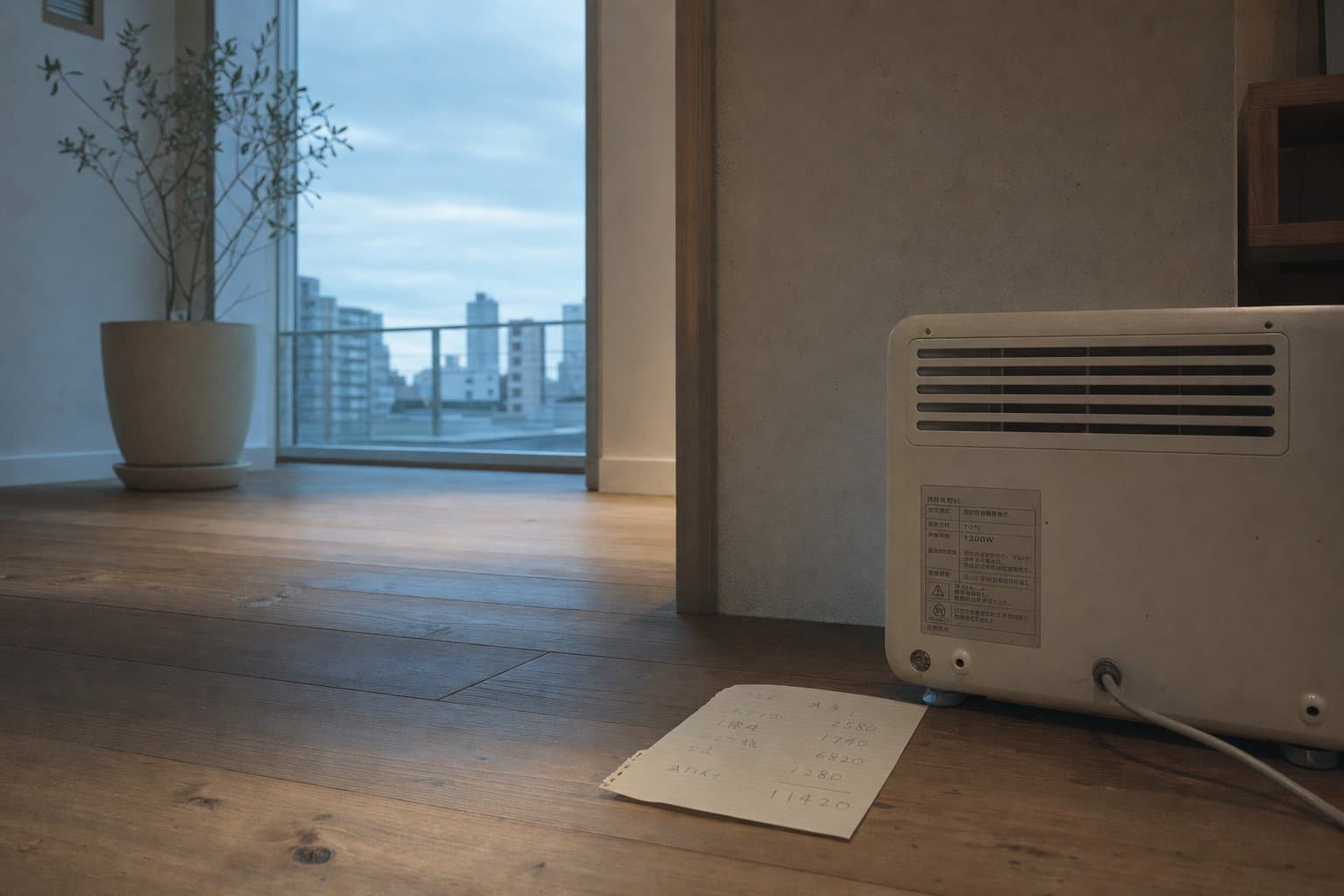
Heating Cost in Japan: The One Formula That Prices Every Heater
Heating cost in Japan comes down to one formula: watts ÷ 1000 × hours × 31 yen. Here's how to price your own heater.
Read more →
Sleepmaxxing 101: How the World Stopped Guessing and Started Optimizing Sleep
Sleepmaxxing has topped 80M views on TikTok. Here's the science of optimizing sleep—seen from Japan, where people sleep the least in the developed world.
Read more →
Dry Itchy Skin in Autumn: Stop Winter Itch Before It Starts
Shin itch at night in autumn? Over-washing may matter more than what you apply. A Japan-based routine.
Read more →