
Cold Feet at Night in Japan: Comparing Four Local Heating Options
Four ways to warm cold feet at night in Japan, compared on burn risk, running cost, and care.
 By Lukas WeberWriter / Sleep & Wellness, Data Verification·2026.10.02 published·2026.10.02 updated·5 min read·2 sources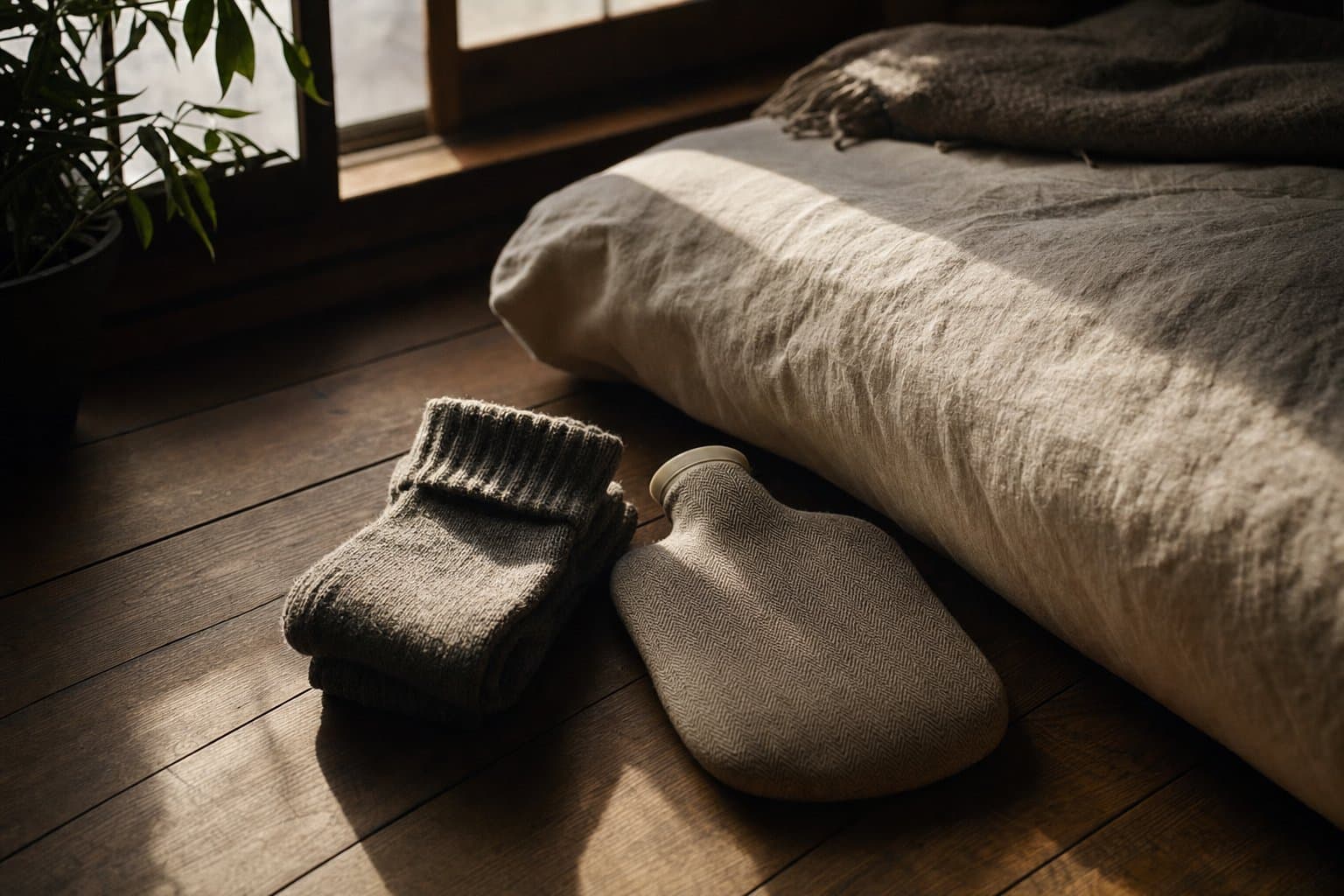
Thirty minutes under the futon and your body is warm, but your toes are still cold. So you reach for the thermostat — and that single choice comes back as next month's electricity bill and a dry throat in the morning. Before raising the temperature of an entire room, there are several ways to heat only the part that is actually cold.
Electric blankets, hot-water bottles, wearable blankets and leg warmers, and under-desk foot heaters. All four answer the same complaint, but they differ in how they deliver heat, what they cost to run, and — most importantly — how they can hurt you. Foot-level heating carries a risk that stronger heaters do not: low-temperature burns, which happen precisely because the surface never feels dangerously hot.
This article lines up the four options across heating method, running cost, safety, and maintenance, then covers how to use them at bedtime. This is not about curing cold sensitivity. It is about warming your feet tonight, safely and cheaply.
What is a low-temperature burn? 44°C for 3–4 hours, 50°C in 2–3 minutes
Before choosing anything, hold on to one set of numbers. According to Japan's National Institute of Technology and Evaluation (NITE), in its Product Safety Magazine Vol. 468 on accidents with warming goods, a low-temperature burn can occur after 3–4 hours of contact at 44°C, 30 minutes to 1 hour at 46°C, and just 2–3 minutes at 50°C. Forty-four degrees is cooler than a typical Japanese bath — and yet, pressed against the same patch of skin all night, it is enough.
The same publication notes reported cases of low-temperature burns from electric foot warmers, disposable heat packs and electric mats, as well as fires caused by scorched cords. The pattern is consistent: harm comes not from devices that feel too hot, but from devices that feel comfortable and stay in place. The Consumer Affairs Agency issues a parallel warning about hot-water bottles, citing injuries from keeping one against the same part of the body.
Non-electric options are not exempt. Every option below tends to be used in exactly the way that triggers this risk — long duration, one spot — which is why the temperature-and-time relationship belongs before the shopping list. Your sense of warmth is not a reliable safety gauge.
Why Japanese winters leave your feet cold even in a heated room
In most Japanese homes, warm air from an air conditioner pools near the ceiling while the floor stays cold. Whether you are sitting or lying down, your feet occupy the lowest, coldest layer of the room. Remote work compounds it: hours in one position, in a room with no kotatsu and no underfloor heating, leave the feet behind.
Raising the thermostat warms head height first; by the time your toes catch up, the air is dry and the meter has been running. That is why turning up the heat is a poor answer to cold feet specifically. The alternative is to stop heating a room and start heating a body part. The energy required differs by an order of magnitude.
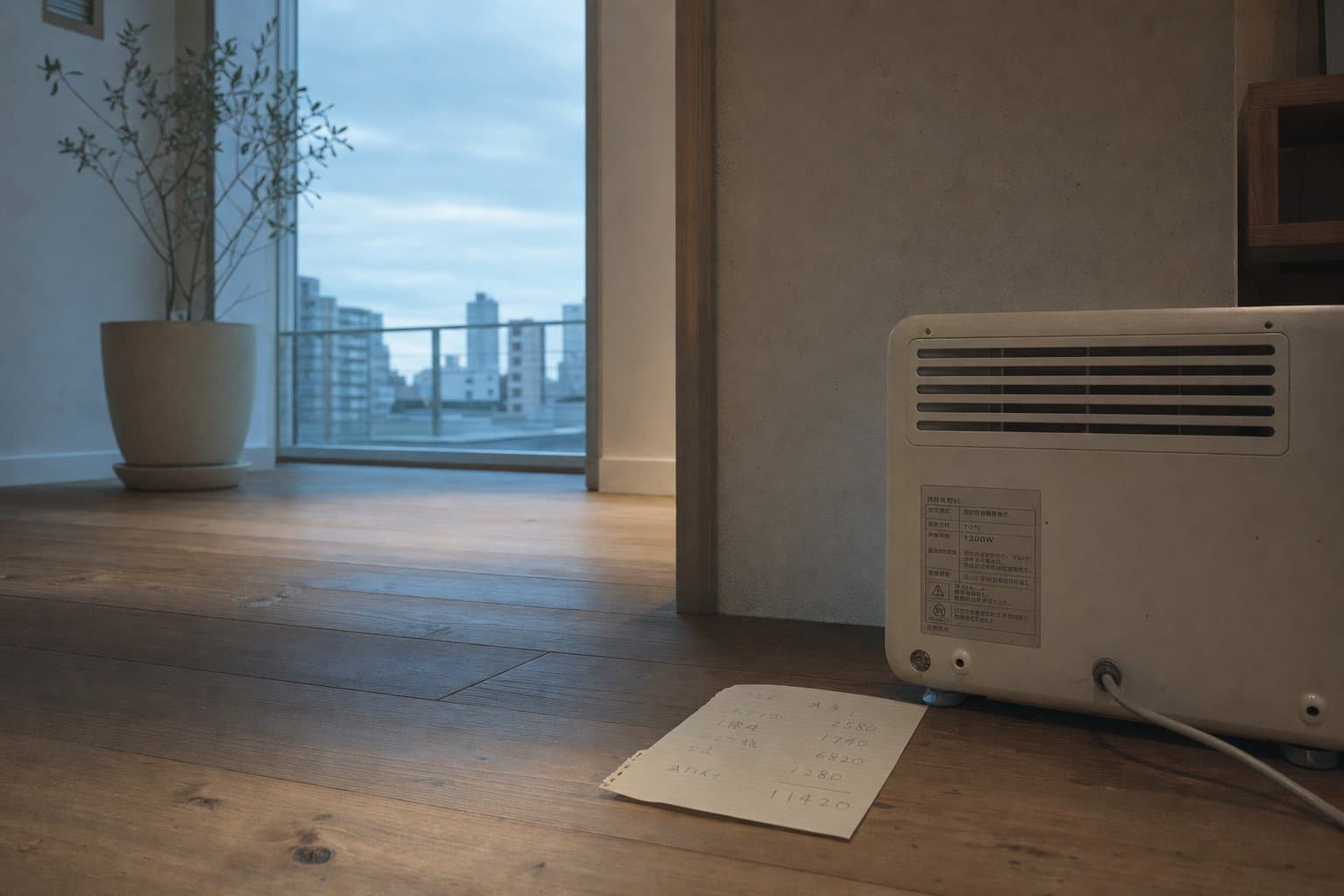
You can estimate running cost yourself: watts ÷ 1000 × hours × price per kWh. Using ¥31/kWh, a 50W device for five hours costs 50 ÷ 1000 × 5 × 31 ≈ ¥7.8. Apply that formula to any spec sheet and the four options become directly comparable — substitute your own rate from your utility bill, since plans vary.
We cover heating bills more broadly in how to lower your heating bill, and cold feet sit next to sleep environment basics and mattresses and back pain.
How to start: five steps for comparing four options
Working from published specifications, here are the four options on the same axes.
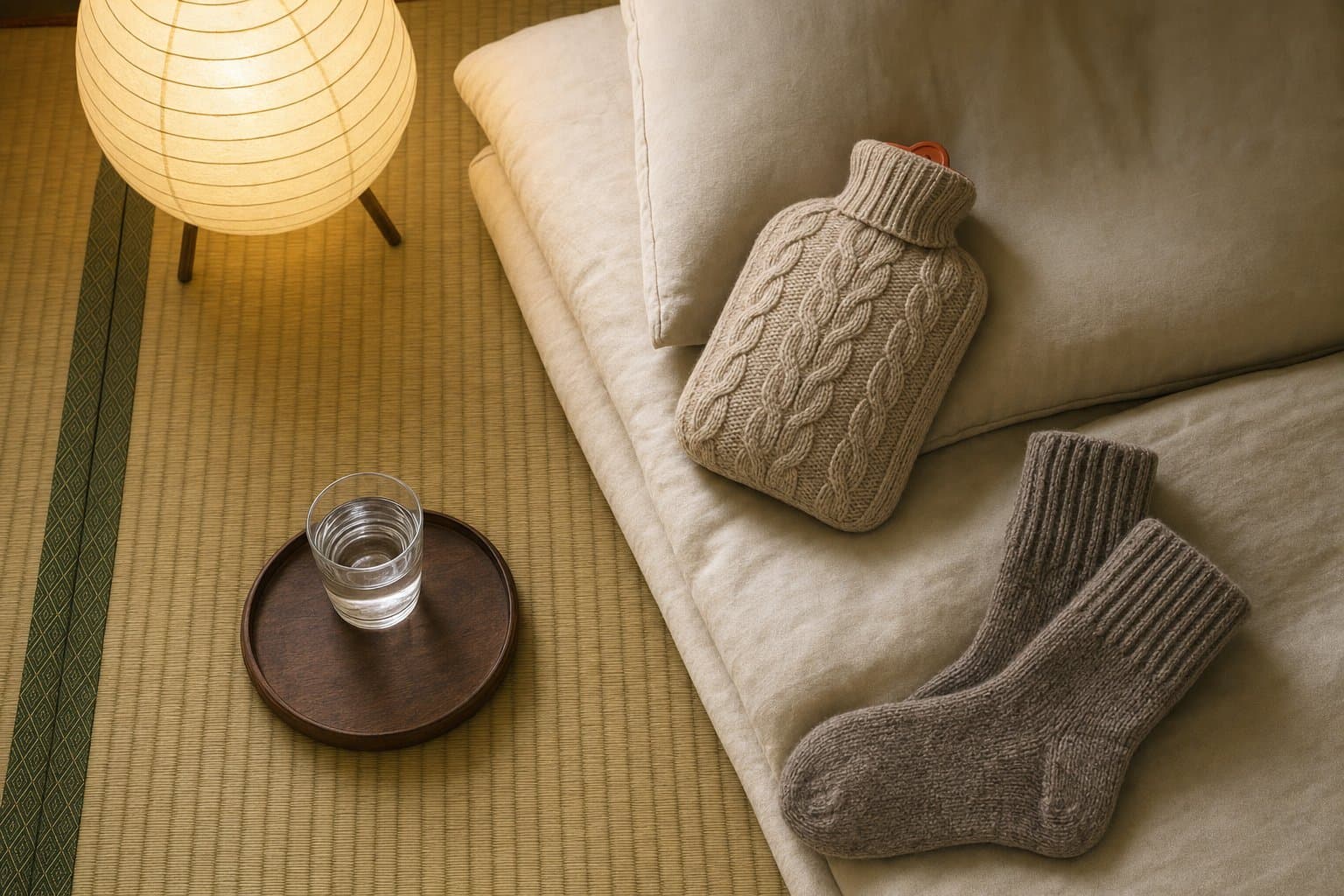
① Narrow by heating method. Electric blankets deliver steady surface heat; hot-water bottles start warm and cool on a curve; wearable blankets and leg warmers insulate rather than generate; foot heaters radiate into a small zone such as under a desk. For sleeping, the option that cools on its own is structurally easier to manage; for desk work, a foot heater fits better.
② Compare cost with the formula. Put each candidate's rated wattage into watts ÷ 1000 × hours × ¥31. Hot-water bottles and wearable blankets draw no electricity, so this line is zero (kettle aside). Use your actual candidate's numbers rather than a borrowed average.
③ Line up the safety profile. Electric blankets and foot heaters involve cords that can fail if bent or pinched — NITE reports fires from scorched cords. Hot-water bottles carry scald risk while filling, plus the same-spot problem.
④ Check maintenance: washability, drying time, off-season storage. Many wearable blankets are machine washable; electric blankets vary by model.
⑤ Choose. For electric blankets, timer granularity and temperature steps make Panasonic's electric underblanket and Yamazen's electric blanket useful comparison points; for hot-water bottles, the spout and cover construction of Marka's hot-water bottle; for wearable blankets, length and wash durability on the mofua Premium Microfiber wearable blanket. These are candidates we assembled from published specifications.
The takeaway: stage your warmth instead of stacking it
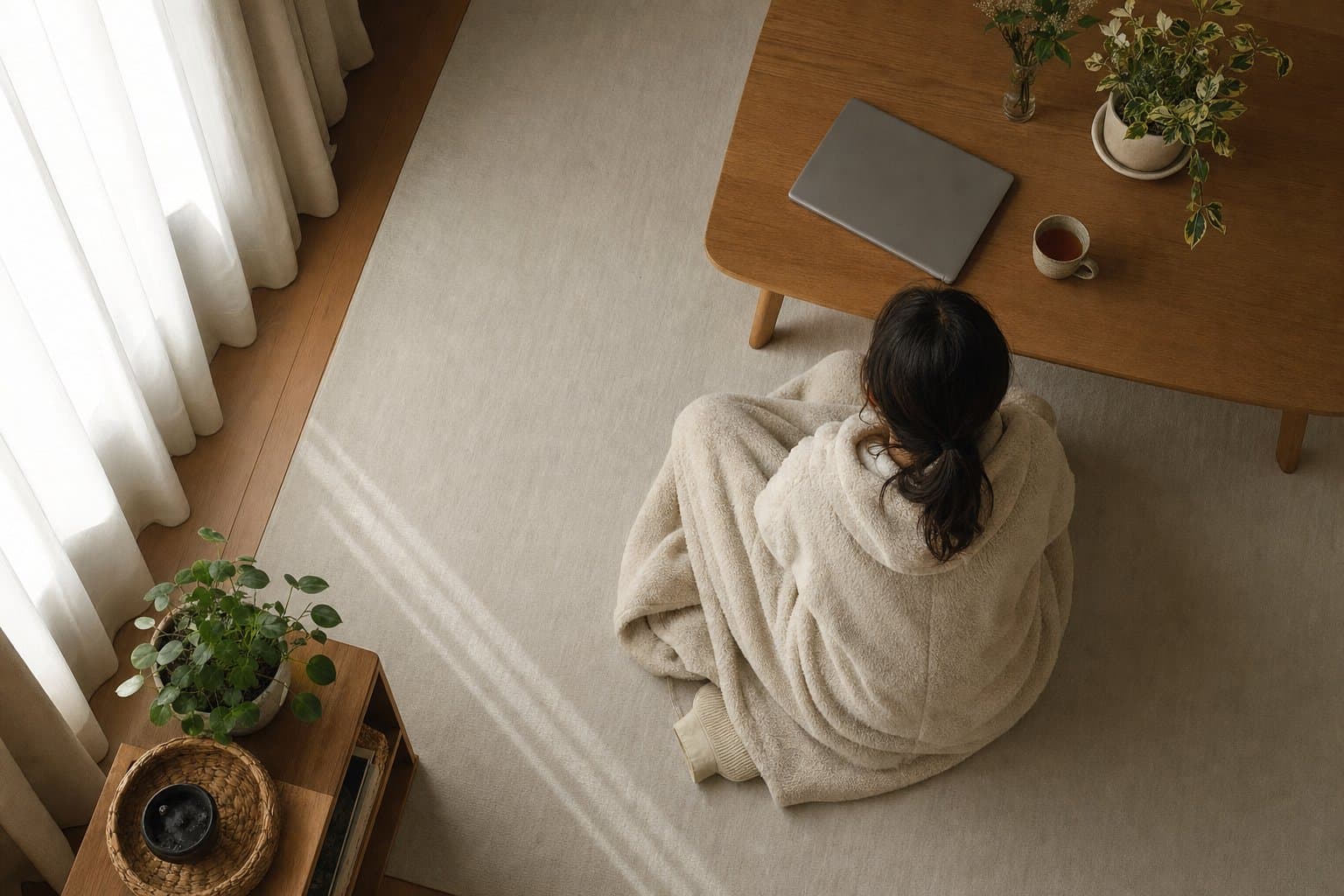
Here is how to combine them. One principle: do not let anything stay powered while you sleep. Warm the bed with a hot-water bottle before you get in, then move it away from direct skin contact. If you use an electric blanket, preheat and switch it off — or set a timer — at bedtime. Let the non-electric layer, a wearable blanket or leg warmers, hold the warmth afterward.
Warmth peaks as you fall asleep and tapers naturally. Every accident described by NITE and the Consumer Affairs Agency shares the same shape: one spot, many hours. Bound the hours and you remove most of the risk. To choose concretely, judge electric blankets on timer function and temperature steps (Panasonic electric underblanket, Yamazen electric blanket), hot-water bottles on spout design and cover (Marka hot-water bottle), and the insulating layer on wash durability and length (mofua Premium Microfiber wearable blanket).
You can compare specifications and prices below. Add one foot-level option, then see whether you can drop the room thermostat by one degree tonight — the cheapest experiment available.
About this article
This article was written by Lukas Weber (Writer / Sleep & Wellness, Data Verification) of the Tokyo Decoded editorial team, with sources and facts checked by the team. We keep editorial independence from advertisers. See our editorial policy.
Sources
Related
Heating Cost in Japan: The One Formula That Prices Every Heater
Heating cost in Japan comes down to one formula: watts ÷ 1000 × hours × 31 yen. Here's how to price your own heater.
Read more →
Mattress for Back Pain: How to Rethink Where You Sleep 8 Hours
Back pain tops Japan's health complaints. A practical guide to choosing a mattress by firmness, pressure distribution, and breathability.
Read more →
Sleepmaxxing 101: How the World Stopped Guessing and Started Optimizing Sleep
Sleepmaxxing has topped 80M views on TikTok. Here's the science of optimizing sleep—seen from Japan, where people sleep the least in the developed world.
Read more →