
Earthquake Kit in Japan: A Cost-First 3-Day Household Checklist (Rolling Stock)
Cost is the No. 1 reason people in Japan don't prepare. A cost-first earthquake kit checklist for three days, built with rolling stock.
 By Sofia ReyesDesigner / Lifestyle & Comparison Guides·2026.08.26 published·2026.09.07 updated·7 min read·2 sources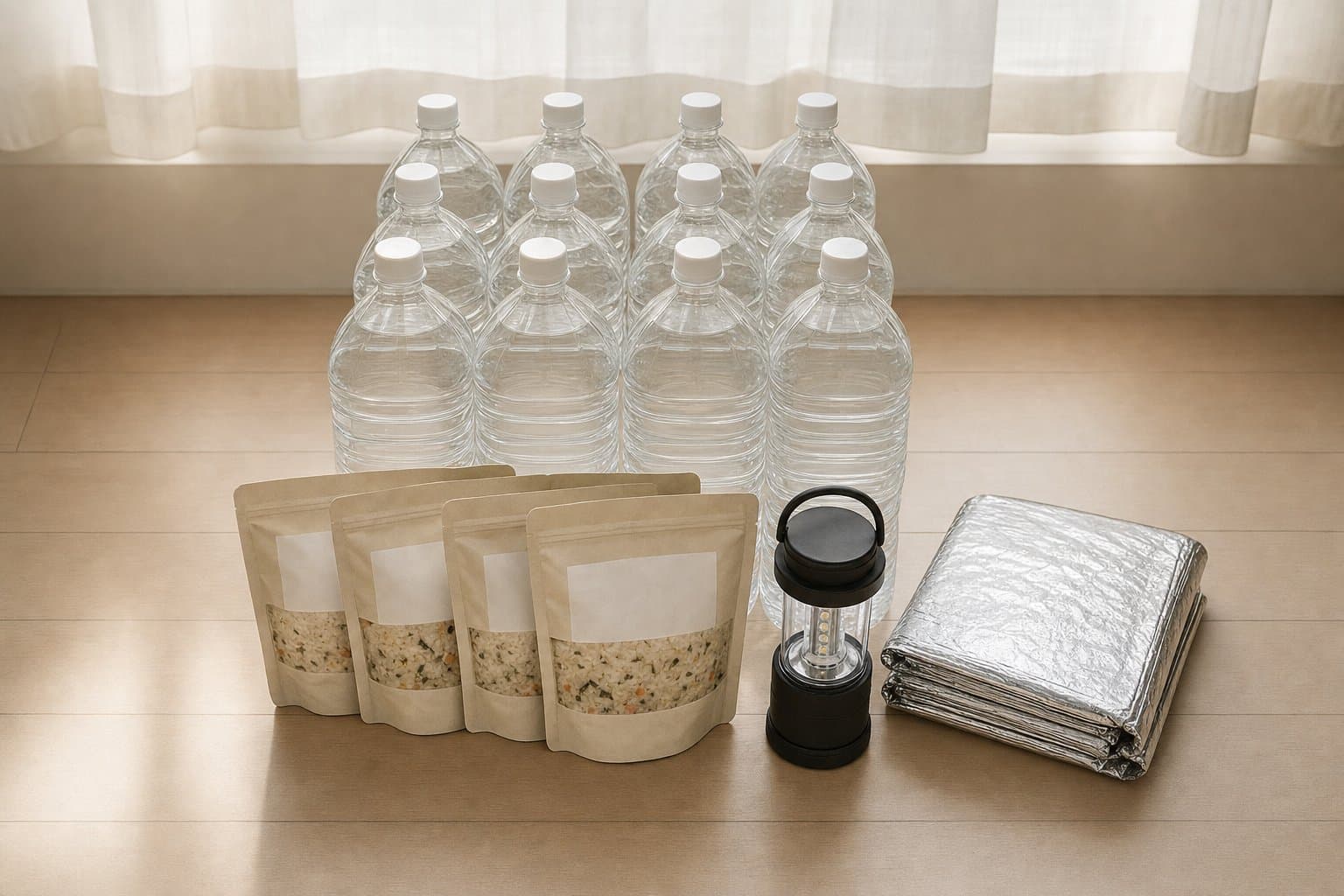
September 1 is Japan's Disaster Prevention Day. If you have been meaning to prep but keep putting it off, you are not alone: according to Midori Anzen's 2025 survey, the top reason households skip disaster prep is cost (28.1%, up 6.3 points year-over-year). Most preparedness articles stack up items — this too, that too — and the only thing left when you finish reading is the gap between the length of the list and the weight of your wallet.
You close the tab before anything reaches the cart. So instead of starting with what to buy, this checklist starts with how little you can spend to begin. The spine of it is rolling stock: buying slightly more of the food you already eat, using the oldest first, and replacing as you go. It is the least dramatic method available, and the one people actually keep up.
The logic is identical whether you live alone or feed a family of four. We put a minimum three-day supply at the finish line, then dissolve the cost into the grocery budget you are already spending. No fear-mongering — just a household earthquake preparedness kit designed around your budget, with a first step small enough to take this week.
What is rolling stock? Japan's 3-day earthquake-kit reality, in data
Rolling stock means keeping a slightly deeper pantry of the food and daily goods you already use, consuming the oldest items first, and topping up what you consumed. The rotation itself is the reserve. Rather than buying specialist emergency rations and burying them in a closet, you build the stockpile into your ordinary consumption cycle.
Less gets thrown away at expiry, and if a disaster does hit, what remains is food you actually know how to eat. The reasoning behind it is a hard truth about human behavior: a special-purchase stockpile peaks the moment you buy it, then quietly expires. A rotating pantry has no peak — it just keeps turning over.
The numbers show Japanese households are still catching up. Midori Anzen's 2025 Household Disaster Prep Survey found only 59.0% of households stock emergency food, with the top barrier being cost (28.1%, up 6.3 points year-over-year). Encouragingly, rolling stock hit a record 24.6% adoption. That is still only about one household in four, but it is the direction the trend is moving.
The Cabinet Office's August 2025 disaster survey shows 69.8% of households keep three or more days of drinking water, 59.8% keep three or more days of food, and just 38.4% keep three or more days of hygiene supplies. Water is approaching seven in ten households; hygiene has not reached four in ten. That gap is a precise map of where the average Japanese home is weakest — and, conveniently, of where a small amount of money buys the most improvement.
Japan's government recommends a minimum of three days, ideally seven. Starting with three days is the realistic first goal; seven can wait until three is rotating on its own.
Why cost blocks prep — the minimum checklist trap
Search for a disaster prep checklist for Japan and you will see the same long list: water, food, portable toilets, radio, power bank, and so on. Buying it all at once easily runs tens of thousands of yen for a family of four — which is exactly why so many people postpone. But the real obstacle is less the total than its shape: the list asks for the whole amount at once, today.
Household budgets are fragile against lump sums. So people stall. The reframe is to treat prep not as a special purchase but as an extension of daily shopping. Rolling stock means buying slightly more of what you already eat, using the oldest first, and replacing as you go — near-zero upfront cost, gradually reaching a three-day supply.
Why does it work mechanically? Because the spending is not additional, it is early. The retort rice you would have eaten next week gets bought this week. What grows is the shelf inventory, not the annual grocery bill. The genuine increment is essentially one rotation's worth, paid once. And as long as you keep consuming and restocking, expiry dates refresh themselves without anyone maintaining a spreadsheet.
That is why it fits Japan so well: earthquakes arrive without warning, but expiry dates arrive on schedule, and a system that does not depend on willpower is the only kind that survives years in the same apartment. One common misconception is worth killing here: rolling stock does not make dedicated emergency food pointless. With power and water cut, your cooking options collapse, so it helps to hold some staples that rehydrate with water alone and some items you can eat straight from the package.
Build the base from everyday food, then blend in a no-cook layer. Two tiers, not one. Creating a slot for preparedness inside the household budget follows the same logic as sinking funds for household expenses — instead of one big annual outlay, you dissolve the cost into your monthly rhythm. That is the backbone of prep that actually sticks.
The minimum earthquake kit for Japan — 3 days of supplies in 5 steps
Here is the cost-optimized order.
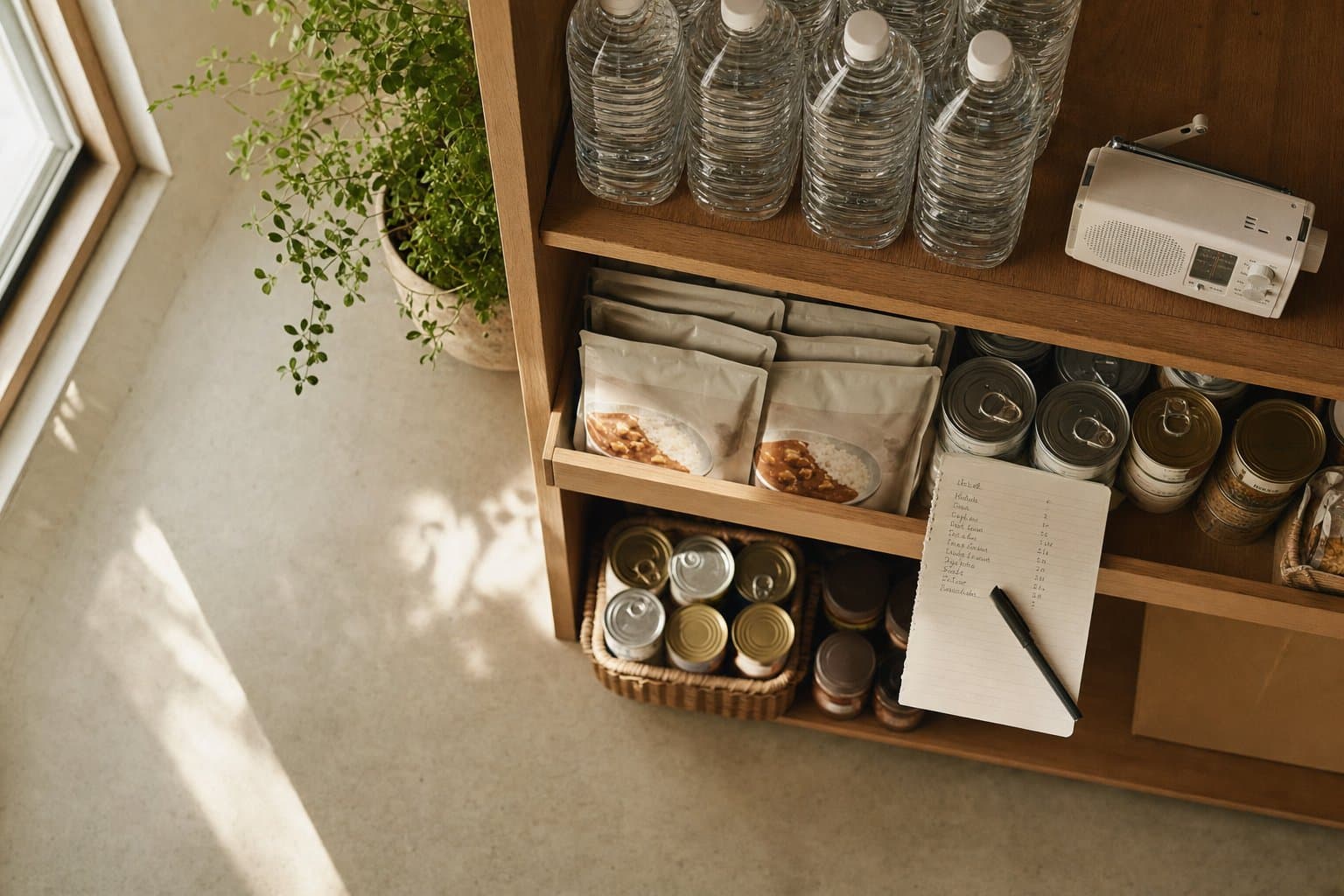
- 【Water】Three liters per person per day times three days, multiplied by household size. Bulk 2L bottles are cheapest, and this is the Cabinet Office's most-stocked item (69.8%). You need it for cooking as well as drinking, so start here. Split the storage across rooms and keep one case near the entrance so it is easy to grab.
- 【Food】Buy an extra week's worth of the retort rice, curry, canned goods, and instant noodles you already eat.
This is the heart of rolling stock. Judge candidates on three questions: can it be eaten without heating, can it be rehydrated with water alone, and does your family genuinely like it. Onisi Foods' alpha rice and Imuraya's Eiyoukan bars are Japanese staples, and the latter can be eaten straight from the wrapper.
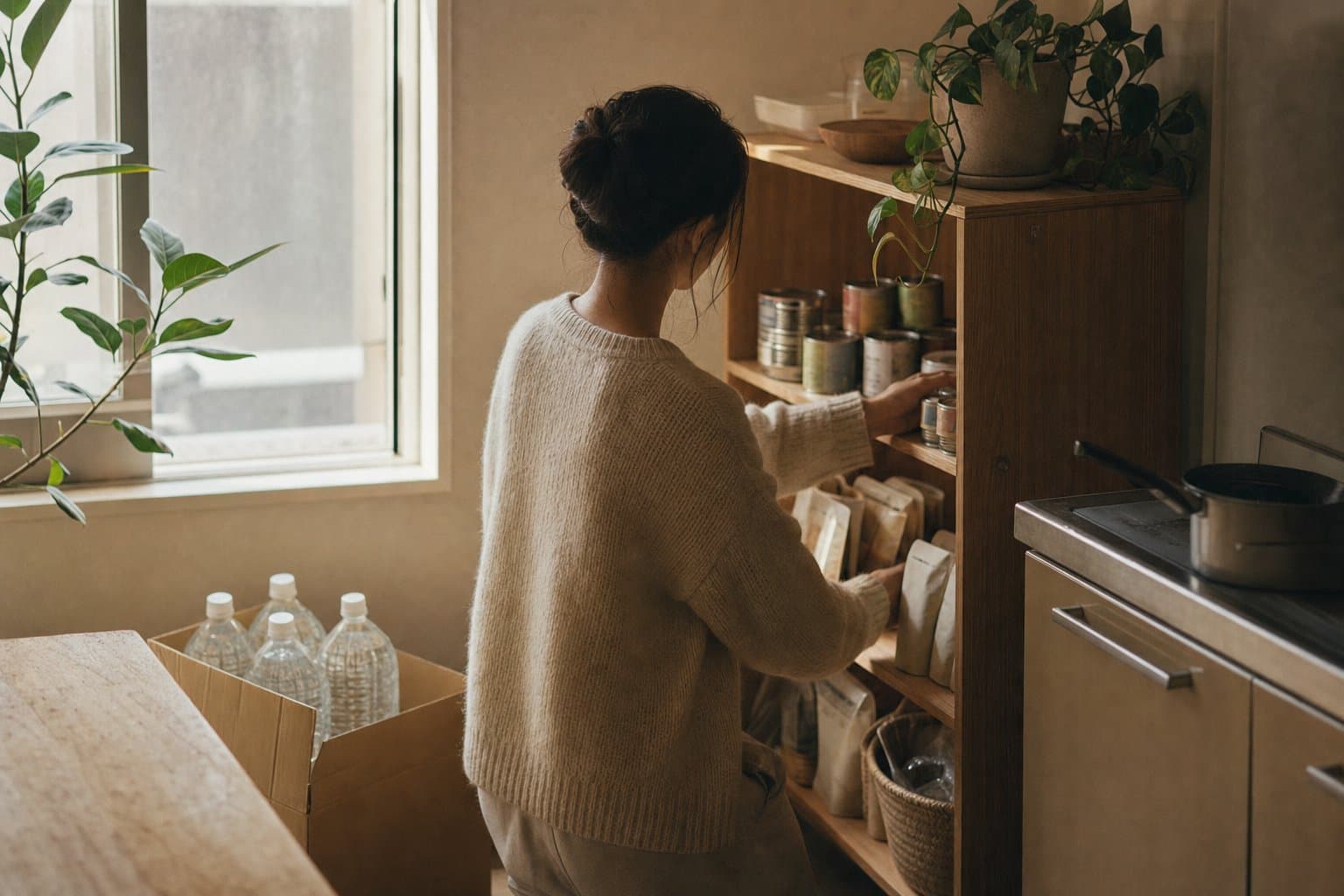
A concrete example of rotation: restock the shelf from the right, eat from the left. That alone enforces first-in, first-out. Once a month, glance at the shelf before your grocery run and note what has thinned out — that frequency is enough. ③【Portable toilets】When water and power cut, toilets fail first.
BOS emergency toilet kits cost cents per use and come in 50-count packs. Plan on roughly five uses per person per day, times household size, times three days.
- 【Light and information】A Gentos LED lantern, a Panasonic hand-crank radio, and an Anker power bank cover the basics. Store batteries with the devices and test that everything lights up twice a year.
- 【Hygiene】Wet wipes, masks, trash bags.
At 38.4% this is the most under-stocked category, so prioritize it deliberately. If you live alone, do
- first and start
- in a small pack rather than a bulk box — less money, less floor space. Split
- –
- into month one and
- –
- into months two and three, and you reach a real three-day kit for a few thousand yen a month.
When the system stalls, diagnose it: items expiring means your inventory is too deep or the food does not match your tastes; forgetting to restock means you need a fixed line on your shopping list template. For prescription medication, or households with infants, elderly members, or pets, needs vary considerably — ask your doctor or your local ward office.
The takeaway: start cheap, sustain through daily life
You do not need to build the perfect kit before September 1. The first step you can take today is buying one case of water, and on your next grocery run putting one extra week of the food you already eat into the cart. That alone moves you toward the top tier of stocked households, and once the restock-right, eat-left habit is turning, the stockpile refreshes itself without further decisions.
When three days is rotating on its own, seven days stops looking like a project and starts looking like a slightly deeper shelf. The products mentioned above — Onisi alpha rice, Imuraya Eiyoukan, BOS emergency toilets, Gentos lanterns, Panasonic hand-crank radios, Anker power banks — are long-standing staples in Japanese households. We organized the publicly available specs and prices on comparable terms, so use the cards below to compare and start with one or two items.
How much you need, and what actually fits your space, depends on your home and household. If you want to rework the household budget itself, our guide on sinking funds is a natural next step.
FAQ
What does rolling stock actually mean?
It means keeping a slightly deeper pantry of the food and daily goods you already use, eating the oldest items first, and buying back what you consumed. The rotation itself is your reserve. Unlike stashing specialist rations in a closet, the cycle of use and replacement refreshes expiry dates automatically, so far less gets thrown away. It also means that in an emergency, what is on the shelf is food you already know how to prepare and actually like.
Which foods work best for rolling stock?
Judge candidates on three questions: can it be eaten without heating, can it be rehydrated with water alone, and does your household genuinely like it. Build the base from everyday items — retort rice, curry, canned goods, instant noodles — then blend in long-shelf-life staples such as Onisi alpha rice or Imuraya Eiyoukan. With power and water cut, your cooking options collapse, so always reserve room for a no-cook layer that needs nothing but opening.
Can you give a concrete rolling stock example?
Restock the shelf from the right and eat from the left — that single rule enforces first-in, first-out with no labels or spreadsheets. Once a month, before your grocery run, look at the shelf and note what has thinned out, then buy it back. That frequency is enough. If things still expire, your inventory is too deep or the food does not match your tastes; if you keep forgetting to restock, add a fixed line to your shopping list template.
Is a 3-day supply enough?
Japan's government recommends a minimum of three days, ideally seven. The practical path is to set three days as the first goal, then extend once the rotation is running on its own. The Cabinet Office survey shows three or more days held by 69.8% of households for drinking water, 59.8% for food, and 38.4% for hygiene supplies — water aside, most homes are only partway there. Needs vary with household makeup, so check with your local ward office or doctor if infants, elderly members, or medication are involved.
What is the minimum kit for someone living alone?
Prioritize three things: water, the food you already eat, and hygiene supplies. Three liters per day for three days of water; an extra week of food with some no-cook options mixed in; wet wipes, masks, and trash bags for hygiene. For portable toilets, start with a small pack rather than a bulk box to save both money and floor space. Add a lantern and a power bank early too — in a blackout, light and a way to check information matter more than an extra category of food.
Should I buy the whole kit at once?
No — and the demand for a lump sum is one of the main reasons preparedness stalls in the first place. Midori Anzen's survey found cost to be the top barrier, cited by 28.1% of households. Split the purchase instead: water and food this month, portable toilets, lighting, and hygiene supplies over the following months. Spreading it across roughly three months keeps each month's outlay small while still arriving at a genuine three-day kit.
About this article
This article was written by Sofia Reyes (Designer / Lifestyle & Comparison Guides) of the Tokyo Decoded editorial team, with sources and facts checked by the team. We keep editorial independence from advertisers. See our editorial policy.
Sources
Related
What Is Fibermaxxing? The Fiber Trend Japan Already Eats
Fibermaxxing came from US TikTok. Japan's answer is already on the table: natto, miso, kiriboshi daikon.
Read more →
Beginner Houseplants: Plant Parenthood for Small Tokyo Apartments
Plant parenthood starts with picking the right species. A calm guide to beginner houseplants that survive small, low-light Tokyo homes.
Read more →
How to Choose a Humidifier: Comparing 4 Types for Autumn
The right humidifier starts with the type. Compare steam, evaporative, ultrasonic and hybrid.
Read more →